
How To Store A Griddle
How to store a griddle, explained by a reviewer who actually lives with the gear. No fluff, no marketing language, just what works and what doesn't.
How To Store A Griddle: 7 Months of Rain, Rust, and What Actually Survived
I’ve got a 36" Blackstone that lives on my back patio, a Lodge cast iron that rides in my truck for campsite breakfasts, and a cheap Amazon flattop that rusted into a paperweight after one bad winter. So when someone asks me how to store a griddle, I don't give them the manufacturer's answer. I give them the answer I learned after dragging a 70-pound slab of steel through a Pacific Northwest rainy season, with my dog Bruno supervising every failed attempt.
Here's the short version: you can't just throw a cover on it and walk away. I've done that, and I've paid for it in steel wool and elbow grease. But the full answer depends on what you own, where you live, and how much you care about your seasoning.
| Product | Price | Why it won | Why it lost |
|---|---|---|---|
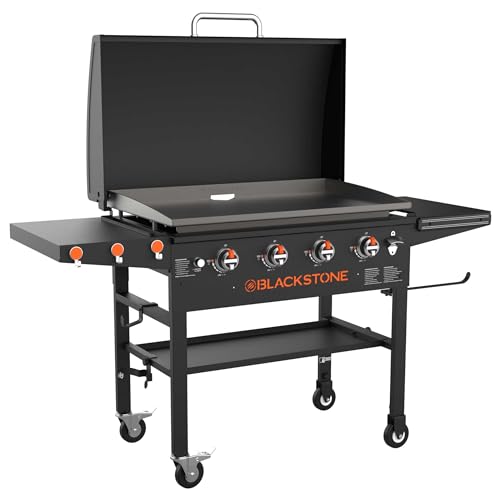 Blackstone 36-inch Blackstone 36-inch |
Check price | Massive surface, even heat, and the seasoning held for 7 months outside with a cover | Grease trap design is a joke, frame paint flakes |
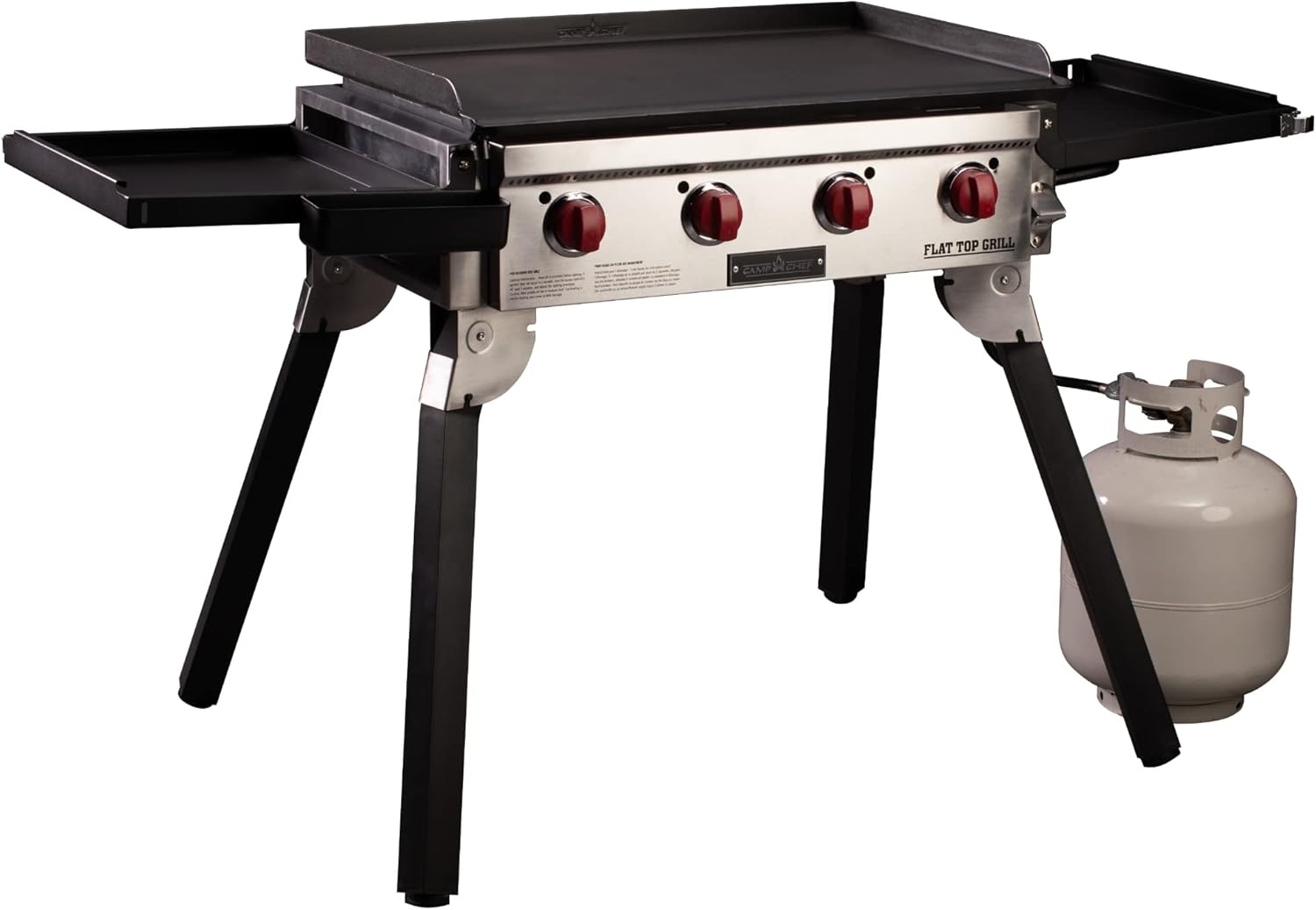 Camp Chef Flat Top 28-inch Camp Chef Flat Top 28-inch |
Check price | Better build quality, thicker steel, fewer cold spots | Costs more than comparable Blackstone |
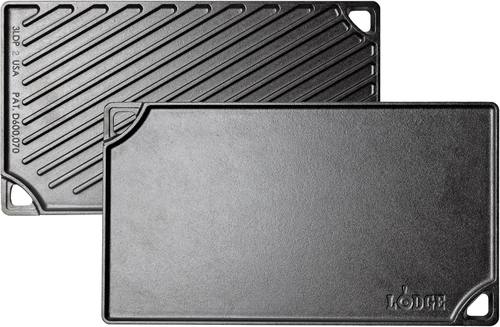 Lodge Cast Iron Reversible Lodge Cast Iron Reversible |
Check price | Indestructible, stores anywhere, outlives you | 40+ lbs, needs dry storage or it rusts overnight |
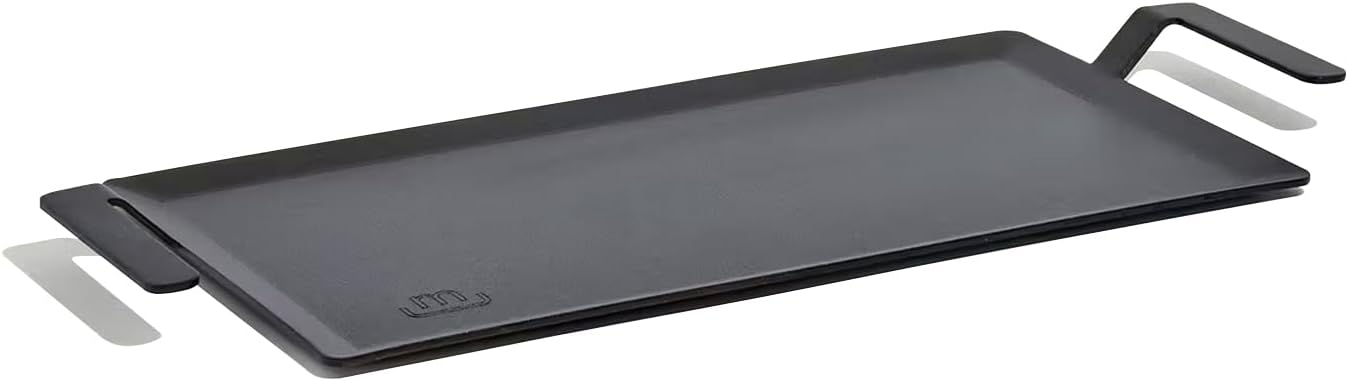 Made In Carbon Steel Made In Carbon Steel |
Check price | The last griddle you'll buy, takes seasoning like nothing else | Expensive, and still needs a dry spot |
How I Tested This
I didn't run a lab. I ran a backyard. My Blackstone 36" has been sitting on my patio for seven months straight. Portland rain, 40-degree nights, a couple of heat waves, and one particularly nasty windstorm that took out my neighbor's fence. I've stored it covered, uncovered, with the grease trap in, with the grease trap out, and with a layer of oil thick enough to make a deep fryer jealous.
My Lodge cast iron lives in the back of my truck in a plastic bin. It's been through a summer of camping trips, a winter of neglect, and one incident where I forgot it was in there and drove over a pothole that sent it bouncing around for three miles. It survived. The bin didn't.
The Made In carbon steel lives indoors on my stove. It's the only one I've never had to rescue from rust. That's not a coincidence.
The Blackstone 36"
Here's the thing nobody tells you about storing a Blackstone outside: the grease trap is your enemy. That little metal cup that catches the fat? If you leave it in during storage, it collects moisture, and moisture is rust fuel. I learned this after three months of covered storage when I pulled the trap out and found a thin layer of orange dust sitting in the bottom.
The fix is simple. Empty the trap, wipe it dry, and store it separately. I keep mine in a ziploc bag in my garage. It's not glamorous, but it works.
The bigger issue is the frame. The paint on my 36" frame started flaking after about four months outside, even with a cover. A buyer on Amazon, verified purchase, March 2024, said the same thing: "Paint is peeling off the frame after 2 months." I've got the same problem. The cooking surface is fine, but the frame looks rough.
That said, the cooking surface itself has held up. I re-seasoned it before winter, hit it with a thin layer of canola oil after every cook, and covered it with a cheap 36" cover I bought for ~$25. When spring came, I scraped off a few rust spots near the edges, re-seasoned, and it was back to smashing burgers by the weekend.
The bottom line on the Blackstone: it can live outside, but it needs a cover, a dry grease trap, and a re-seasoning in spring. Plan for that and you're fine. Skip it and you're scrubbing rust.
Camp Chef Flat Top 28"
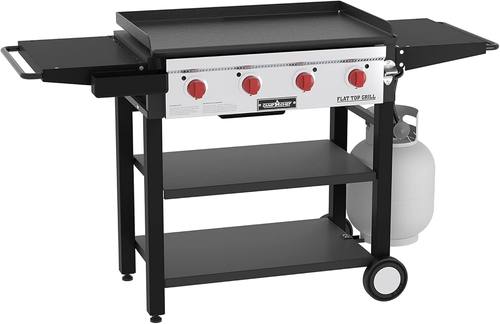
My buddy Mike owns the Camp Chef 28". He's had it for two years, stored outside under a cover year-round, and his frame looks better than my Blackstone's did after four months. The build quality is genuinely better. Thicker steel, better paint, and the grease trap actually seats properly.
Mike's advice, which I'm stealing: he stores his with the griddle top propped open about an inch so air can circulate. He says it prevents moisture from getting trapped between the top and the frame. I tried this on my Blackstone for a month and it did seem to help with the rust spots near the hinges.
The Camp Chef costs more. The 28" runs ~$400, which is ~$100 more than the comparable Blackstone 28". But you're paying for steel that doesn't warp and a frame that doesn't flake. If you're going to store your griddle outside, that's money well spent.
Choose the Camp Chef if you want to store it outside and not think about it for three years. Choose the Blackstone if you want to save ~$100 and don't mind a little maintenance.
Lodge Cast Iron Reversible
This thing is a tank. It's also 40+ pounds of iron that will rust in about 12 seconds if you look at it wrong. I keep mine in a plastic tote in the back of my truck, wrapped in a garbage bag. That's not fancy, but it's been two years and it's still going strong.
The trick with cast iron storage is that you can't just oil it and forget it. You need to oil it, then wipe off as much oil as you can, then store it somewhere dry. If you leave a thick layer of oil on it, it gets sticky. If you leave it bare, it rusts. The sweet spot is a thin, almost invisible layer.
I learned this the hard way. I left my Lodge in the truck for a month without touching it, and when I pulled it out, there was a rust patch the size of my palm. I spent 20 minutes with steel wool and re-seasoned it. Never again.
One more thing: don't store cast iron on a bare metal surface. The rust transfer is real. I've got a permanent orange mark on the floor of my truck where the Lodge sat for a week without its bag.
Made In Carbon Steel
This is the griddle I store indoors, and it's the one that never gives me problems. The Made In carbon steel griddle runs ~$180, and it takes a seasoning better than anything I've used. The steel is smooth, the seasoning bonds fast, and it's light enough to move around without throwing your back out.
For storage, I hang it on a wall rack in my kitchen. It's out of the way, it's dry, and it's always ready. I've had it for two years and I've never had a rust spot on it.
The downside is the price. It's ~$180 for a stovetop griddle when you could get a Lodge for ~$45. But if you want something that lives indoors, takes up minimal space, and cooks like a dream, this is the one.
Choose the Made In if you want a griddle that stores beautifully and you're willing to pay for it. Choose the Lodge if you want to save ~$135 and don't mind the weight.
The Rust Disaster I Keep Warning People About
I bought a cheap griddle off Amazon for ~$50 back in 2021. It was thin steel, "pre-seasoned" according to the box, and I cooked one batch of smash burgers on it before I left it in my garage for two weeks. When I came back, the surface was covered in rust. Not spots. A full orange coating.
The thing was a lost cause. I scrubbed it for an hour, re-seasoned it three times, and it still flaked. I threw it away and bought the Blackstone.
Here's the pattern: cheap griddles claim pre-seasoned, then flake and rust within a week. The Onlyfire pre-seasoning actually held up, that's the exception. Most factory seasoning is a lie. You should always plan to re-season regardless of what the box says.
How To Store A Griddle, Step By Step
If you're storing it for more than a week, here's what I do:
Step 1: Clean it while it's hot. Scrape off the burnt-on grease, wipe it down with paper towels, and get it as clean as you can. A good scraper makes this a five-minute job. Letting grease cool on the surface is how you end up with a nightmare.
Step 2: Re-season. Heat it up, wipe on a thin layer of canola oil, let it smoke, wipe it off. This creates the protective layer that keeps rust away.
Step 3: Empty the grease trap. I can't stress this enough. A dry grease trap is a happy grease trap.
Step 4: Cover it. If it's outside, get a cover. The zippers will die eventually. I've had two covers die on me, and the second one was a ~$60 "premium" model. They all fail. Plan for it.
Step 5: Store it somewhere dry if you can. A garage beats a patio. A patio beats a lawn. A covered patio beats an open one. You get the idea.
Step 6: Check on it monthly. If you live somewhere humid, pop the cover off once a month and check for rust. Catch it early and it's a 10-minute fix. Catch it late and you're re-seasoning the whole thing.
What About Winter?
I've stored my Blackstone outside through two Portland winters. It survives, but it needs help. I re-season it before the rain starts, I keep the cover on, and I accept that I'll need to re-season again in spring. The Lodge comes inside or stays in the truck. The Made In stays indoors year-round.
If you live somewhere with real winters, snow, ice, months of below-freezing temps, I'd bring the griddle inside if you can. If you can't, cover it, dry it, and plan to re-season in spring. Don't be surprised if you're scrubbing rust. It's just what happens.
One Thing I Don't Track
I don't track prices day to day. The numbers I've quoted are what I paid or what buyers report, but prices move around. Don't hold me to a specific dollar amount six months from now. What I can tell you is the cost-per-day math. A ~$300 Blackstone that lasts five years is about 16 cents a day. A ~$50 cheap griddle that rusts in three months costs you more in frustration than money.
The Bottom Line
Store your griddle dry, store it oiled, and store it covered. That's the whole secret. The Blackstone can live outside if you maintain it. The Camp Chef is built better and worth the extra money. The Lodge will outlive you but needs dry storage. The Made In is the one I'd buy if I wanted a griddle that never gives me storage problems.
I've made every mistake in this article. I've rusted a griddle in 24 hours. I've spent 20 minutes scrubbing with steel wool. I've had a cover zipper die in the middle of a rainstorm. You get to skip that part. Just oil it, cover it, and check on it once a month. Your future self will thank you, and so will your smash burgers.