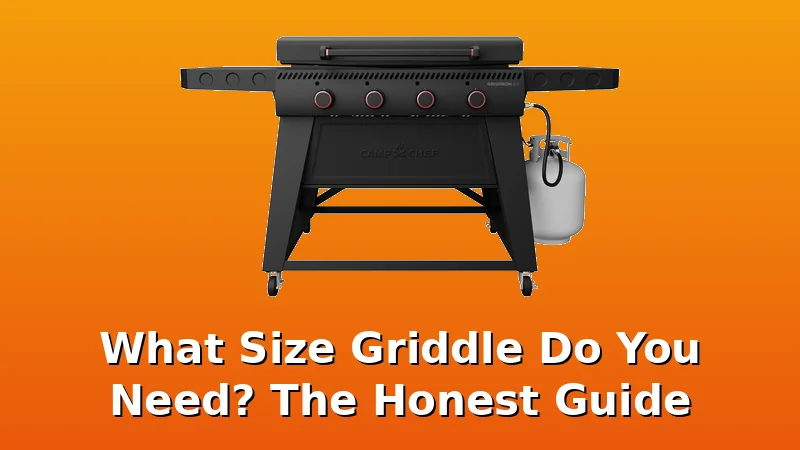
Related: Griddle Temperature Guide
Well, a 22-inch griddle sounds like the obvious answer for a family of four, right? That’s what the marketing says. But after eight years on a diner flat top and four years living with my 36" Blackstone in the backyard, I can tell you the right size has less to do with the number of people at your table and more to do with how you actually cook on a Tuesday night.
My name’s Dom, and I’ve burned, rusted, and warped my way through enough griddles to know that the size chart on the box is a suggestion, not a rule.
Here’s the short version before I get into the grease and gristle of it.
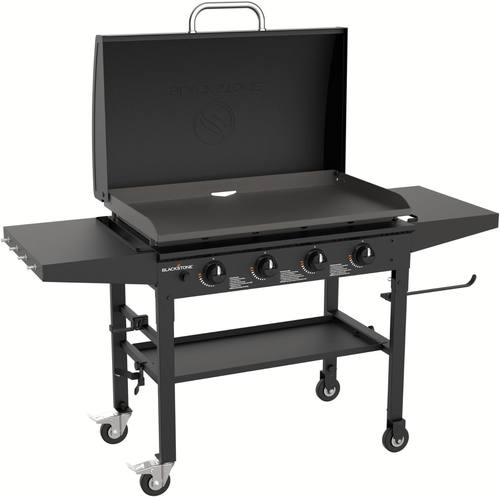
Blackstone 36 Inch Gas Griddle with Hood Cooking Station 4 Burner Flat Top Gas Grill Propane Fuelled Restaurant Grade Professional 36” Outdoor Griddle Station with Side Shelf
The gold standard. Massive surface, even heat, and it handles a full breakfast service or a...
Visit on Amazon →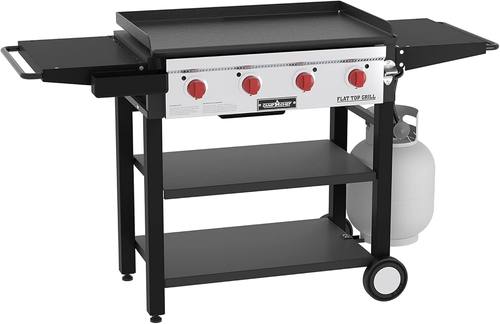
Camp Chef Flat Top Grill - Flat Top Propane Gas Grill - Outdoor Grill for Outdoor Cooking Equipment & Camping Gear - 600
Built like a tank. Thicker steel, better grease management, and a sturdier frame than the...
Visit on Amazon →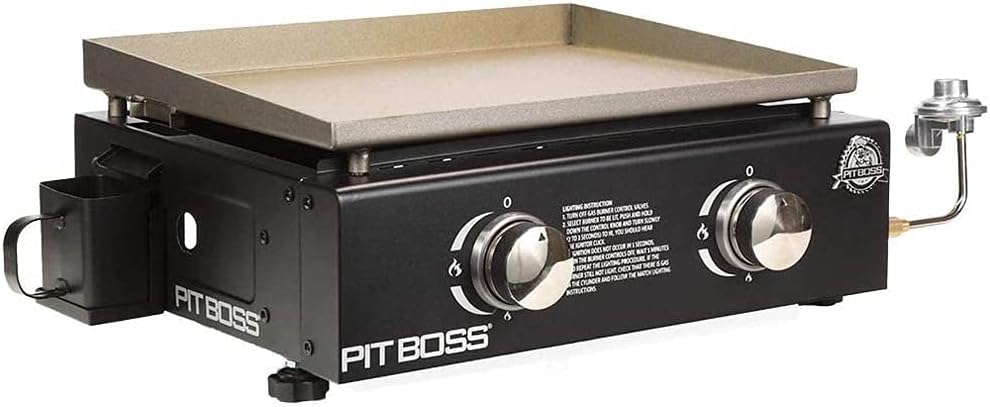
Pit Boss PB336GS Two Burner Portable Flat Top Griddle - Cover Included
The budget play. Solid heat distribution for the price, and it won't fall apart on you.
Visit on Amazon →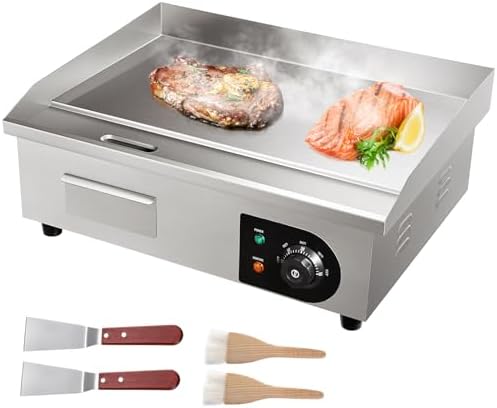
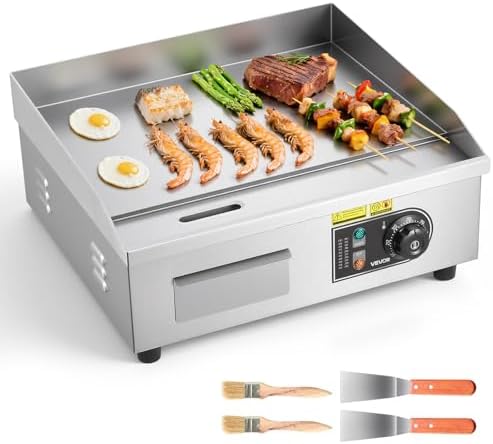
VEVOR Commercial Electric Griddle, 22", Countertop Flat Top Griddle
A solid countertop option for apartments or small patios. Heats up fast and handles a decent...
Visit on Amazon →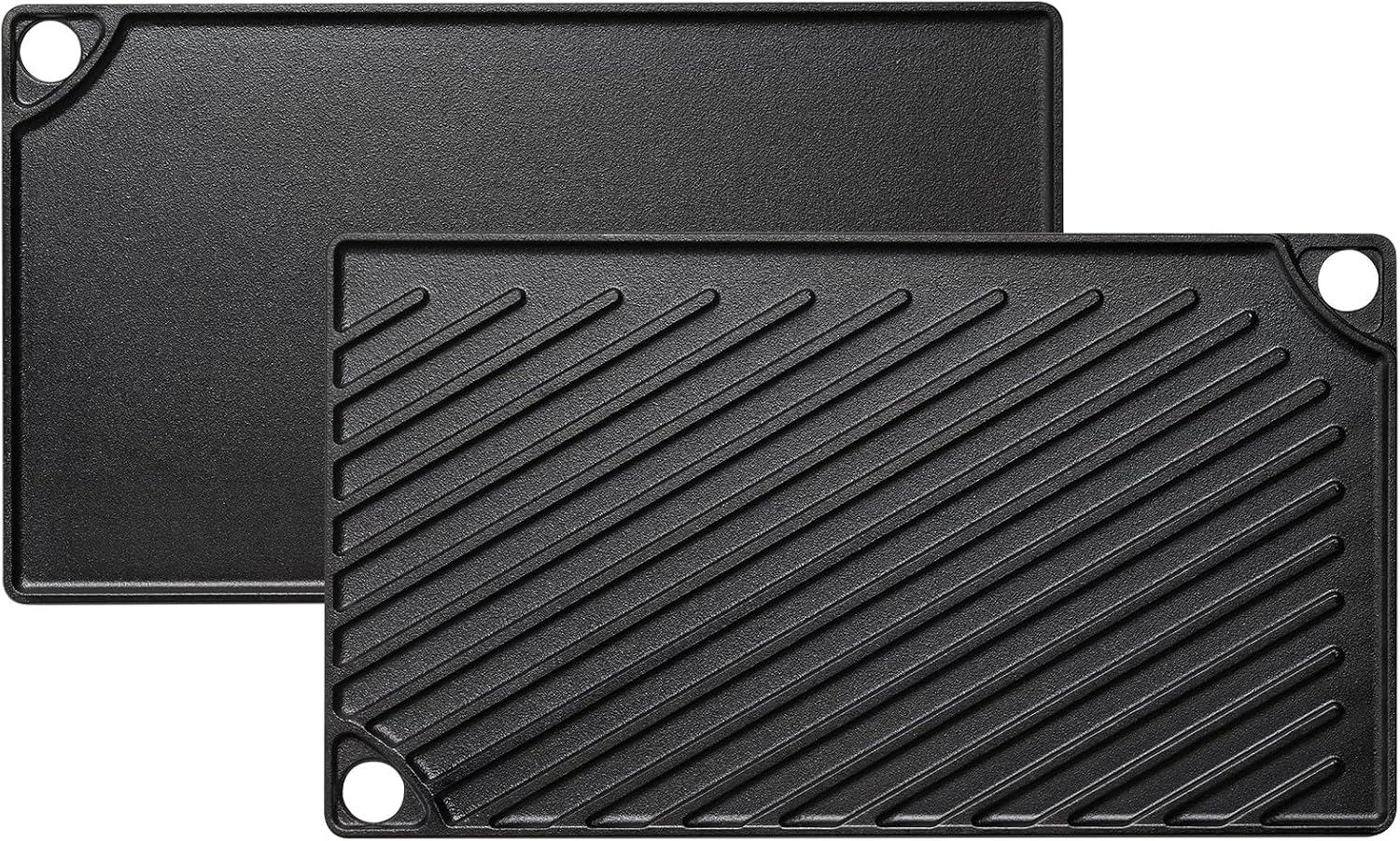
EWFEN Reversible Grill/Griddle, 16.7x9.5'' Pre-Seasoned Cast Iron Griddle Pan, Double Burner Cookware, Rectangular Stovetop Griddle with Handles, Flat Top Plate for Oven, Grill & Campfire
The starter piece. Cheap, portable, and it'll teach you how to season.
Visit on Amazon →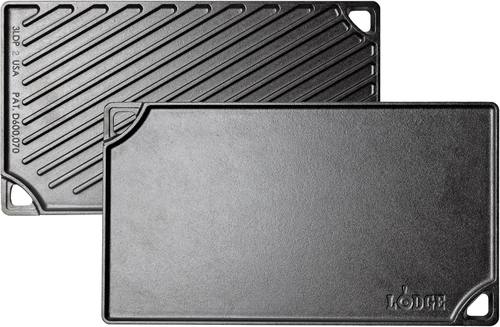
Lodge Reversible Cast Iron Grill/Griddle Pan, 16.75 x 9.5 Inches
Heavy as hell, but it'll outlive you. The ultimate learning tool.
Visit on Amazon →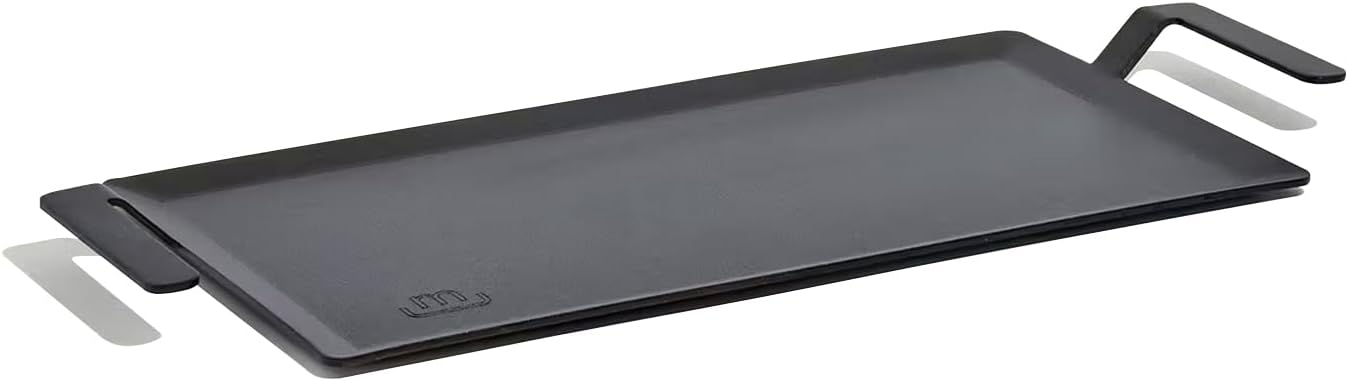
Made In Cookware - Carbon Steel Griddle - Professional Cookware - Crafted in Sweden - Induction Compatible
The last griddle you'll buy. Takes a seasoning like nothing else.
Visit on Amazon →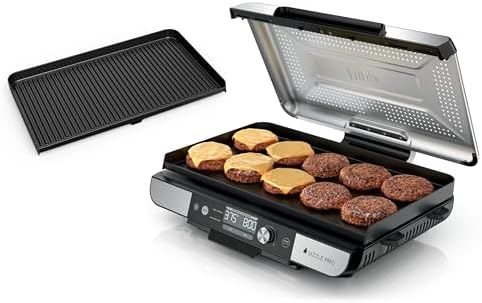
Ninja® Sizzle™ Pro XL 20'' Indoor Griddle & Grill, Silver, GX101
Indoor powerhouse. 20" of non-stick surface that handles a family breakfast without smoking out...
Visit on Amazon →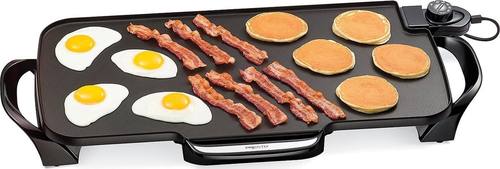
Presto 07061 22-Inch Electric Ceramic Griddle
The budget indoor champ. Simple, reliable, and it gets hot.
Visit on Amazon →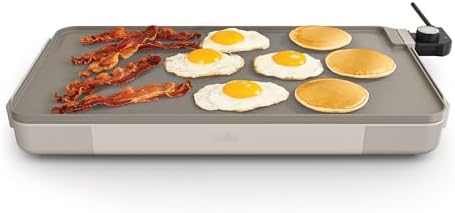
bella XL 12"x22" Electric Ceramic Titanium Non-Toxic Griddle, Copper/Black
As outdoor enthusiasts & founders of Blackstone we dreamed of a quality outdoor griddle &/or grill that could cook for large groups & families. In 2005 we made our vision a reality by creating Blackst
Visit on Amazon →How I Test
I don’t run lab tests. I run a food trailer and a backyard griddle that sees action three times a week. Colby, my 70-pound lab mix, supervises every cookout from exactly three feet away. For this guide, I cooked on my own gear, my buddy’s Camp Chef, and a few electric models I’ve had in the shop.
I also paid attention to what buyers keep saying on Amazon, because a pattern of complaints is worth more than any spec sheet.
The 17-Inch Portables: Cute, But For Who?
Let’s start with the small stuff. A 17-inch griddle is a tailgate toy. I’ve used them, and they’re fine for two people and a pack of hot dogs. But here’s the thing: a 17-inch surface is about the size of a large cutting board.
You can cook four smash burgers on it if you’re careful, but you’re not doing a pound of bacon and a dozen eggs at the same time.
The VEVOR 18" electric is a step up, but it’s still a countertop unit. If you live in an apartment with no outdoor space, it’s a decent compromise.
But if you have a patio, skip the portables and go bigger.
The 22-Inch Question: The Sweet Spot or the Tease?
A 22-inch griddle is the most common size for a reason. It’s big enough to feed a family of four, and it fits on most standard tables or carts. But here’s the catch: it’s not big enough for a full breakfast service.
I’ve cooked on a 22" and you’re constantly juggling. You do the bacon first, move it to a warming rack, then do the eggs, then the pancakes.
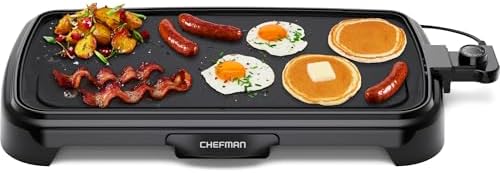
It works, but it’s a dance. The Presto 22" electric is a fine indoor option for this size. It’s cheap, it heats evenly, and it’s easy to clean.
The non-stick coating will wear out after a year, but for ~$50, that’s not a tragedy. The VEVOR 22" is a better electric if you want a thicker steel surface.
It’s 1600W, which is enough to get a decent sear, but it’s still not a gas flame.
The 30-Inch Middle Child
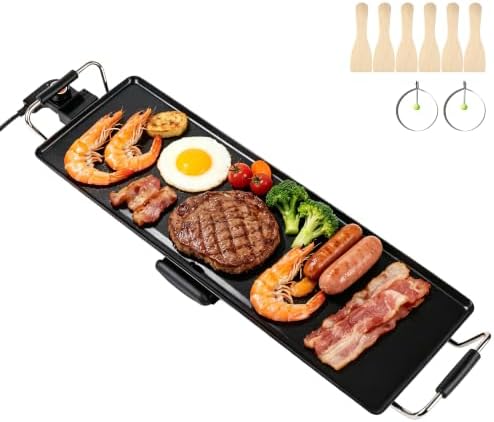
I’ve seen a few 30-inch models, and they’re an awkward middle ground. The 30-Inch Electric Griddle is a teppanyaki-style unit that’s popular for indoor hibachi nights. It’s got a 1400W heating element and a non-stick surface.
It’s fine for a family dinner, but it’s not a flat top for serious cooking. The surface is thin, and you’ll get hot spots.
If you’re considering a 30-inch, I’d say go up to a 36-inch gas model or stick with a 22-inch electric.
The middle size doesn’t really solve the problem.
The 36-Inch Beast: My Daily Driver
My 36" Blackstone is the workhorse. I’ve had it for four years, and it’s been through tailgates, family reunions, and countless Sunday breakfasts. The cooking surface is massive, and the heat distribution is even across the whole top.
No cold spots in the back left corner, which is more than I can say for cheaper models. But the grease trap is a design flaw.
It overflows if you’re cooking a lot of bacon, and the frame paint flakes off after a few seasons. I’ve learned to scrape more often and empty the trap mid-cook.
It’s a hassle, but the cooking surface is worth it.
A buyer on Amazon, verified purchase, March 2024, put it this way: "The grease trap is a joke, it overflows every time." I’ve seen the same thing on my own unit. But here’s the thing: I’d still buy it again. The surface is that good.
The Budget Pick: Pit Boss
If you’re on a budget, the Pit Boss 22" is a solid value. It’s not going to blow you away, but it won’t fall apart either. The build quality is decent, and the heat distribution is acceptable for the price. The grease trap is small, but it works. If you’re feeding four people and you don’t want to spend ~$300, this is the one.
The Camp Chef Alternative
My buddy has a Camp Chef Flat Top 600, and I’ve cooked on it a few times. It feels more solid than the Blackstone. The steel is thicker, the frame is sturdier, and the grease management is better. It’s also more expensive.
If you’re choosing between a Camp Chef and a Blackstone, the Camp Chef is the smarter buy if you can stomach the price difference.
But you’re not getting twice the performance for twice the price.
The Stovetop Options: Lodge and Made In
For stovetop griddles, the Lodge Reversible Cast Iron is the classic. It’s 16.75" x 9.5", it weighs 40+ pounds, and it’ll outlive you. The weight is a pain, and the learning curve is real. But you can’t kill it.
If you want to learn how to manage a flat top without spending big, get a Lodge and learn the hard way.
The EWFEN Reversible is a cheaper alternative, but the pre-seasoning is a lie. I seasoned it three times and it still rusted.
That’s when I learned to buy quality or buy twice.
The Made In carbon steel griddle is the last griddle you’ll buy. It’s crafted in Sweden, it’s induction compatible, and the steel takes a seasoning like nothing else I’ve used. It’s expensive, around ~$180, but it’s worth it. The bella XL is a cheaper indoor option, but the ceramic coating is thin and it won’t hold up to heavy use.
The Ninja Sizzle Pro XL: Indoor Powerhouse
The Ninja Sizzle Pro XL is a different beast. It’s a 20-inch indoor griddle that’s designed for countertop use. I’ve used it for a full breakfast service, and it handles it without smoking out the kitchen.
The non-stick surface is excellent, and the heat distribution is even. It’s not a flat top for serious searing, but it’s perfect for a family dinner or a weekend brunch.
The downside is that it’s electric and indoor-only. No live fire, no outdoor cookout vibe.
The Size Question, Answered
So what size do you need? Here’s my honest take. If you’re cooking for four people on a Tuesday night, a 22-inch griddle is fine. But if you entertain, if you tailgate, if you ever cook for more than four people, go bigger.
A 36-inch is overkill for a family of four, but it’s the difference between cooking in shifts and cooking all at once.
I’d rather have the space and not need it than need it and not have it.
For storage, a 22-inch fits on a standard shelf. A 36-inch needs a dedicated cart or table. I keep mine on a stainless steel prep table with a cover. If you’re in an apartment, a 22-inch electric is your best bet. If you have a patio, go gas.
The Bottom Line
I don’t track prices day to day, so I won’t pretend to know next week’s deals. But I know this: buy the size you’ll actually use, and don’t cheap out on the grease trap. The Blackstone 36" is the gold standard for a reason. The Camp Chef is built better. The Lodge is heavy but immortal. And if you’re just starting out, a 22-inch electric will teach you the basics.
Pick the size that fits your space, your crowd, and your patience. And for God’s sake, get a wind guard before your first cookout. Trust me, your brother-in-law will thank you.