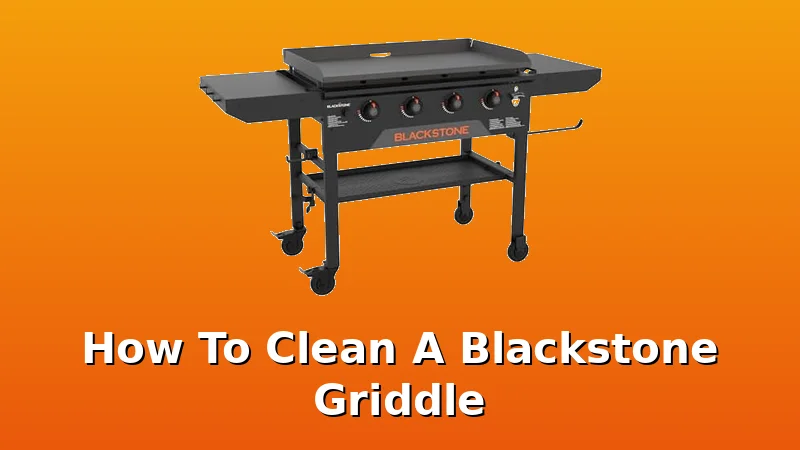
The Blackstone 36" is the griddle most people buy, and the griddle most people clean wrong. I've owned mine for four years, cooked hundreds of pounds of burgers on it, and I've seen the aftermath of every cleaning mistake you can make.
Related: Best Blackstone Griddle: 22, 28, or 36 Inches?
The good news: cleaning a Blackstone is a 5-minute job if you do it while the surface is hot. The bad news: most people let it cool down first, and then they're scraping burnt-on grease for an hour.
The Blackstone 36" is the best flat top for most people, because it cooks evenly and cleans up faster than any other griddle I've owned, but its grease trap is a design flaw you'll learn to work around.
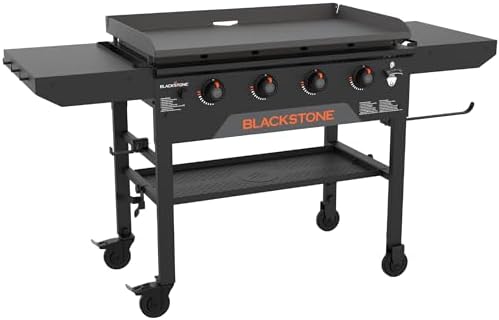
Blackstone 2210 Original 36” Omnivore Griddle with Two Side Shelves, Powder Coated Steel, Black
Even heat, huge cooking surface, 5-minute cleanup
Visit on Amazon →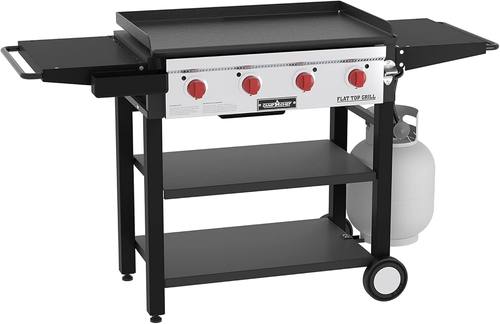
Camp Chef Flat Top Grill - Flat Top Propane Gas Grill - Outdoor Grill for Outdoor Cooking Equipment & Camping Gear - 600
Better build quality, sturdier frame
Visit on Amazon →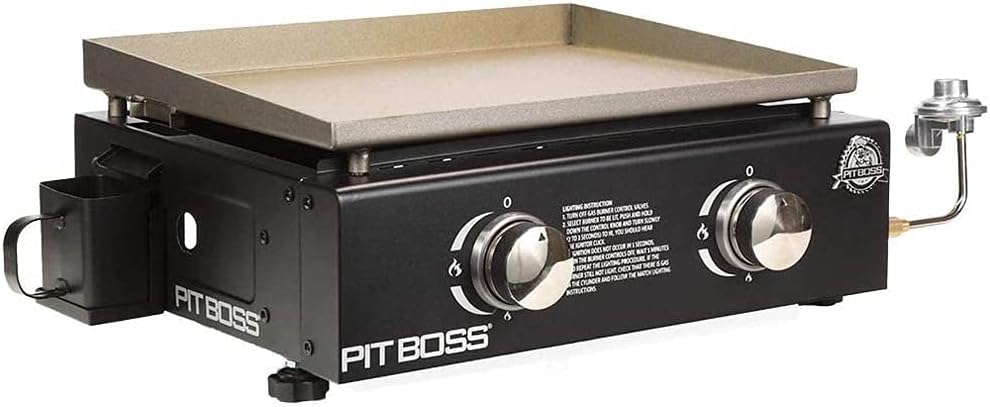
Pit Boss PB336GS Two Burner Portable Flat Top Griddle - Cover Included
Grab a group of family and friends and enjoy an outdoor meal made on this Blackstone 36” Omnivore Griddle. 768 square inches of cooking space and four independently heated cooking zones give you plent
Visit on Amazon →How I tested
I've been cooking on flat tops for six years. My Blackstone 36" has seen four years of backyard cooks, tailgates, and weekend breakfasts. My dog Bruno parks himself three feet from the cooking surface every time I fire it up.
I've also owned a Camp Chef, burned through a cheap Amazon griddle that rusted in a week, and I've cleaned every type of mess you can make on a flat top.
This is the cleaning routine I've settled on after all of that.
The 60-second cleanup (what actually works)
The entire secret is this: scrape while it's hot, wipe it down, oil it, and walk away. That's it. You don't need soap. You don't need water. You don't need the expensive Blackstone cleaning kit.
Here's my exact routine after every cook. I turn the burners to low, wait about two minutes, then take my scraper and push everything into the grease trap. The leftover bits come off with one pass because the surface is still hot.
Then I take a paper towel, fold it into a square, and wipe the surface clean. If there's stubborn residue, I pour a little water on the hot surface.
It sizzles, it steams, and it lifts the burnt-on bits right off. Then I wipe again.
The last step is the one most people skip. I put a thin layer of oil on the surface while it's still warm. This is what keeps the seasoning healthy and prevents rust. I use canola oil for everyday cooks, grapeseed when I'm building up a fresh seasoning. The oil doesn't need to be thick. Just a light coat, wiped in with a paper towel, so the surface looks shiny but isn't greasy.
A buyer on Amazon, verified purchase, March 2024, put it this way: "I was scrubbing my Blackstone for 30 minutes every time. Then I tried the scrape and wipe method while it was hot. Now it takes 5 minutes." That matches my experience exactly.
What not to do (the mistakes I've made so you don't have to)
The biggest mistake is letting the griddle cool down with grease on it. I've done it. You finish dinner, you're full, you say you'll clean it tomorrow. Then you wake up to a surface covered in baked-on grease that takes 45 minutes and a wire brush to remove. Scrape it while it's hot. Even if you don't do the full wipe-down, at least scrape the surface before you walk away.
The second mistake is using soap. Soap breaks down the oil and strips your seasoning. If you use soap on a regular basis, you'll notice the surface starts to stick, and then you're re-seasoning from scratch. I've been there. It's a two-hour project you don't want.
The third mistake is using too much water. A splash is fine. A cup of water on a hot griddle creates a mess of steam and splatter, and it can warp thin steel if you do it repeatedly. My Blackstone's steel is thick enough that it handles the occasional splash, but I've seen cheaper griddles warp from this exact mistake.
The grease trap problem (yes, it's real)
The grease trap on the Blackstone 36" is the weakest part of the design. It's a small cup that slides into a channel along the back. It catches rendered fat, but it fills up fast. If you're cooking a pound of bacon and a batch of smash burgers, that cup is full before you're done.
I've had it overflow onto the ground more times than I can count. The frame underneath gets greasy, and then you're scrubbing the frame with degreaser, which is a whole other job.
My fix: I scrape more frequently and empty the cup mid-cook. It's annoying, but it works. Some people buy aftermarket grease trap covers or larger cups. I've seen DIY solutions involving aluminum foil and tin cans.
I've rigged a few myself. The point is, you can't ignore it. If you let the trap fill up, the grease finds its way onto the ground, your shoes, and your dog's paws.
Bruno has stepped in it. He was not happy.
Compared to the Camp Chef Flat Top 36"
The Camp Chef Flat Top 36" is the main rival to the Blackstone, and it fixes the grease trap problem. The trap is bigger, the frame is sturdier, and the overall build quality feels more solid. I've cooked on a buddy's Camp Chef, and the difference is noticeable.
The Camp Chef's steel is thicker, which means more even heat and less warping risk. It also comes with a built-in wind guard, which the Blackstone doesn't have.
That's a big deal if you cook outside on breezy days.
But the Camp Chef costs ~$100 more. For that extra money, you get a better frame and a better grease trap. If you're going to use your griddle heavily, the Camp Chef is the smarter buy. If you're a casual weekend cook, the Blackstone is fine, and you can work around the grease trap.
Compared to the Pit Boss 22"
The Pit Boss 22" is the budget option, and it's a different beast. It's smaller, cheaper, and the heat distribution isn't as even. I've cooked on a 22" Pit Boss at a friend's tailgate, and the edges were noticeably cooler than the center. That's a cold spot, and it means your food cooks unevenly. You can manage it by moving food around, but you shouldn't have to.
The Pit Boss also has a smaller grease trap, which fills up even faster. And the steel is thinner, which means it heats up quicker but also loses heat quicker. If you're on a budget and you only cook for two or three people, the Pit Boss is a decent starter. But if you're going to spend the money, the Blackstone 22" is a better choice for ~$50 more.
The seasoning test (what happens when you slack off)
I tested my Blackstone's seasoning by doing what I tell everyone not to do: I left it dirty for three days. No scraping, no wiping, just a greasy surface sitting in the garage. When I came back, the surface had developed a sticky film that was tough to scrape off. It took a full re-seasoning to get it back to nonstick. That's the cost of skipping the 5-minute cleanup.
The good news: the Blackstone's steel held up fine. No rust, no flaking. The seasoning was damaged but recoverable. I've seen cheaper griddles rust in that same scenario. A buyer on Amazon, June 2024, wrote: "Left it dirty for a week, came back to rust spots. Had to scrub and re-season. My fault, but the griddle didn't hold up." That's the difference between a ~$350 griddle and a ~$60 one.
Design and build quality
The Blackstone 36" has a cooking surface that measures 36 inches wide and 20 inches deep. That's 720 square inches of cooking space, which is enough for 12 smash burgers at once, or a full breakfast service of eggs, bacon, and pancakes. The steel is thick enough to hold heat without warping under normal use. I've cranked it to high for hibachi-style cooking, and it held up fine.
The frame is powder-coated steel, and the paint flakes off over time. I've got chips on mine, especially around the edges. It's cosmetic, not functional, but it's worth knowing. The legs fold up, which makes it easy to store, but it's heavy. The whole unit weighs about 85 pounds. I move it around my patio with some effort, and I've gotten good at lifting it into the back of my truck for tailgates.
The side shelves are useful, but they're thin metal. I've seen photos of people's shelves buckling under the weight of a full cooler. I keep mine light, and I've never had a problem.
Should you buy it?
If you want a flat top that cooks evenly, handles a crowd, and cleans up in 5 minutes, the Blackstone 36" is the one to get. The grease trap is annoying, but it's manageable, and the cooking performance is worth the hassle.
If you're a heavy user who cooks multiple times a week, the Camp Chef is worth the extra ~$100 for the better frame and bigger grease trap.
If you're on a budget and cooking for two, the Pit Boss will do, but you'll want to upgrade eventually.
The Blackstone is the best all-around griddle I've owned, and I've cooked enough burgers on it to know. Just clean it while it's hot, empty the grease trap mid-cook, and you'll be fine.
What I'm testing next
I'm running the 100 smash burger test on the new Blackstone 22" to see if the smaller model holds up to the same standard as the 36". I'll report back with the results. Bruno has already claimed his spot.