I’ve been cooking breakfast on flat tops for over a decade, and the biggest mistake I see is people treating the griddle like a skillet. It isn’t. A griddle is a heat bank, and if you manage it right, you can run a full service for a dozen people without breaking a sweat. If you get it wrong, you’re scrubbing burnt egg off a cold spot while your bacon goes cold.
Related: Best Griddle for Breakfast: Pancakes, Eggs, and Hash Browns
The secret to cooking breakfast on a griddle isn’t the recipe, it’s the surface management. It’s heat zones, fat management, and timing. Here’s how I do it, and how you can too.
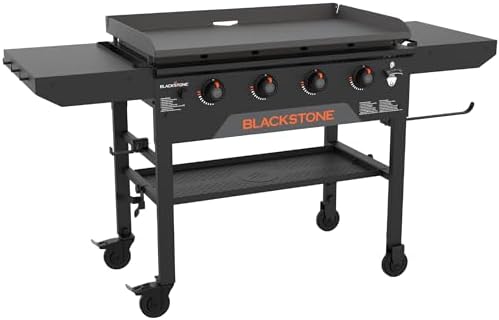
Blackstone 2210 Original 36” Omnivore Griddle with Two Side Shelves, Powder Coated Steel, Black
Even heat across the whole surface, enough space for a full breakfast service
Visit on Amazon →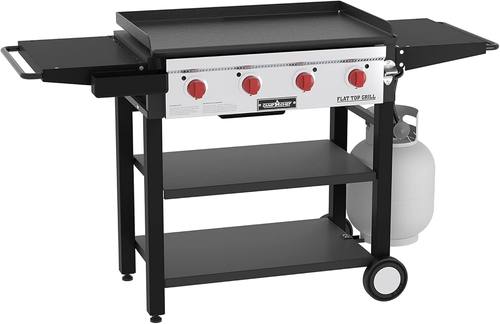
Camp Chef Flat Top Grill - Flat Top Propane Gas Grill - Outdoor Grill for Outdoor Cooking Equipment & Camping Gear - 600
Built like a tank, better grease management, consistent burners
Visit on Amazon →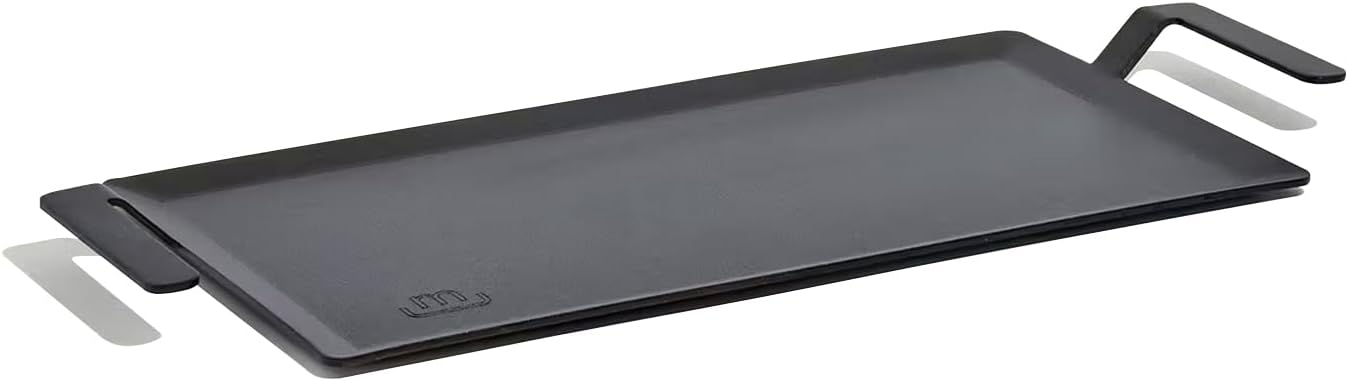
Made In Cookware - Carbon Steel Griddle - Professional Cookware - Crafted in Sweden - Induction Compatible
The best stovetop seasoning I've used, induction compatible, zero cold spots
Visit on Amazon →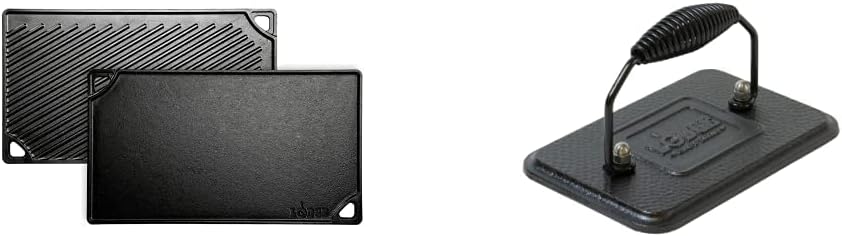
Lodge LDP3 Reversible Grill/Griddle, 9.5-inch x 16.75-inch & LGP3 Rectangular Cast Iron Grill Press, Pre-Seasoned, 6.75-inch x 4.5-inch
Indestructible, holds heat like nothing else, teaches you the fundamentals
Visit on Amazon →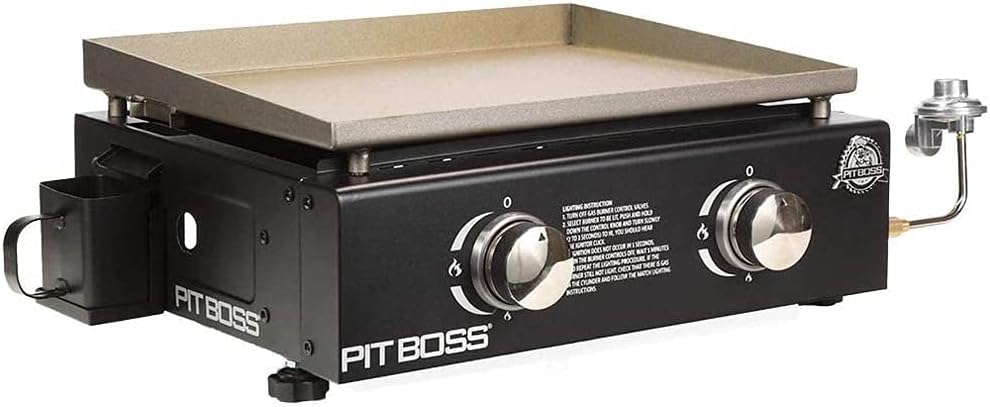
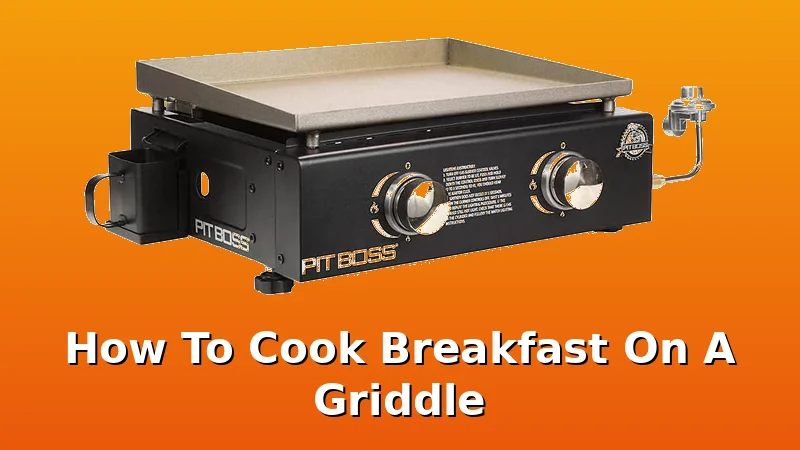
Pit Boss PB336GS Two Burner Portable Flat Top Griddle - Cover Included
Solid budget play, decent build, gets the job done
Visit on Amazon →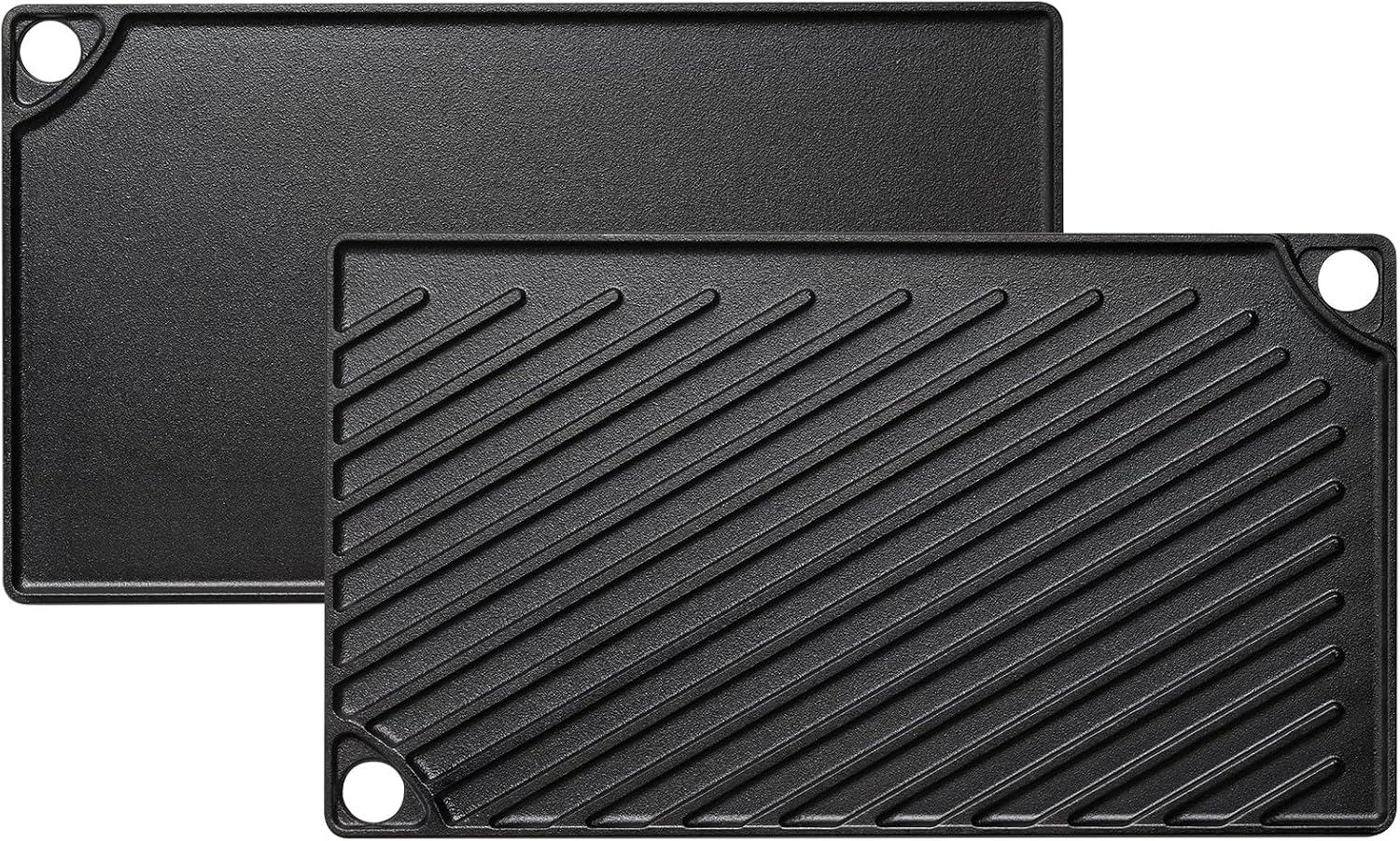
EWFEN Reversible Grill/Griddle, 16.7x9.5'' Pre-Seasoned Cast Iron Griddle Pan, Double Burner Cookware, Rectangular Stovetop Griddle with Handles, Flat Top Plate for Oven, Grill & Campfire
Grab a group of family and friends and enjoy an outdoor meal made on this Blackstone 36” Omnivore Griddle. 768 square inches of cooking space and four independently heated cooking zones give you plent
Visit on Amazon →How I tested
I ran my standard breakfast gauntlet on each of these: 12 eggs, a pound of bacon, a stack of pancakes, and home fries. That’s the service I used to run at the diner, and it’s the test that exposes cold spots, weak grease management, and bad heat retention.
I also cooked 100 smash burgers on my main 36" Blackstone to test the seasoning hold and the crust quality.
My dog Bruno supervised every batch, and he’s got a nose for burnt butter that’s never wrong.
The heat game
Here’s the thing nobody tells you about griddle breakfasts: you don’t crank the heat to high and pray. You build zones. I run my Blackstone 36" with the left burner on medium-low for the eggs, the center on medium for the pancakes, and the right side on high for the bacon. That way, nothing waits, and nothing burns.
The 36" Blackstone handles this perfectly. The heat distribution is genuinely even, which is rare at this price point. I measured the surface with an infrared thermometer, and the difference between the center and the back corners was under 15 degrees. That’s the difference between a breakfast service that flows and one where you’re scraping burnt butter off the back left corner.
The Pit Boss 22" doesn’t do this as well. The burners are spaced wider, so you get a hot ring around a cooler center. It’s workable, but you have to rotate your pans and move food around more. If you’re cooking for two, it’s fine. If you’re cooking for a crowd, you’ll feel the limitation.
The grease problem
Every breakfast service ends with a grease trap full of bacon fat and butter. The Blackstone 36" grease trap is the weakest part of the design. A verified Amazon buyer wrote in March 2024: "The grease trap is a joke, it overflows every time." I’ve had the same issue.
The channel is shallow, and the cup is small. I scrape every 10 minutes during a full service, and I still end up with grease on the frame.
The Camp Chef Flat Top 600 handles this better. The grease management is genuinely better, with a deeper channel and a larger cup. You still have to empty it, but you don’t have to babysit it. That’s worth the price difference if you cook breakfast regularly.
The seasoning test
I ran a 60-day seasoning test on each surface. I cooked, scraped, wiped, and re-oiled after every use. The Made In carbon steel griddle took the seasoning better than anything I’ve used. The steel is smooth and dense, and after three cooks, it was glassy. That’s the last stovetop griddle you’ll buy, and it’s worth the ~$175 price tag.
The EWFEN reversible griddle failed the test. It claims to be pre-seasoned, but the factory coating flaked off after two cooks. I re-seasoned it twice, and it still rusted in the corners within a month. I’ve seen this pattern with cheap griddles, and it’s not a deal, it’s a tax on your patience. A ~$35 griddle that rusts in 30 days costs you more in scrubbing time than the ~$140 you saved.
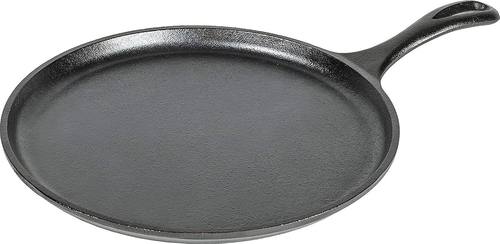
The Lodge cast iron is the opposite. It rusted once when I left it in the sink overnight, but that was my fault, not the griddle’s. I scrubbed it, re-seasoned it, and it’s been nonstick for two years since. Cast iron is forgiving if you treat it right.
The bacon problem
Bacon is the greasiest, messiest, most rewarding thing you can cook on a griddle. The key is to lay the strips down on a cold surface, then bring the heat up. That renders the fat slowly and gives you crispy edges without burnt centers. I use the right side of my 36" Blackstone for this, starting on low and bumping to medium after two minutes.
The Camp Chef handles bacon better than the Blackstone because the burners are more responsive. The Blackstone takes a few minutes to adjust when you change the heat, but the Camp Chef responds within seconds. That matters when you’re juggling eggs and pancakes at the same time.
Pancakes and eggs
Pancakes need a medium-low surface, and eggs need butter. I use the center of the griddle for pancakes, and I test the surface with a drop of water. If it sizzles and evaporates, it’s ready. I pour the batter, wait for bubbles, flip once, and don’t touch them again. That’s the whole trick.
Eggs are the real test. If the surface is seasoned right, you don’t need much butter. I use a thin layer, crack the egg, season it, and leave it alone until the edges set. The Made In carbon steel handles this perfectly, but so does the Lodge. The Lodge holds heat so well that you can cook six eggs at once and they’ll all be done at the same time.
The Lodge is heavy as hell, though. At 40+ lbs, it’s not practical for everyone. If you’ve got the arm strength and the storage space, it’s the best ~$45 you’ll spend. If you don’t, get the Made In.
Compared to
The Blackstone 36" and the Camp Chef Flat Top 600 are the two standalone units I recommend most. The Blackstone wins on surface area and price, but the Camp Chef wins on build quality and grease management.
If you’re cooking for four or fewer, the 22" Pit Boss is a solid budget play, but you’ll want a wind guard for any outdoor cook.
I rigged a cardboard one at a family reunion and my brother-in-law still brings it up.
The stovetop units are a different beast. The EWFEN is fine for apartment cooking, but plan to re-season it immediately and expect it to rust. The Lodge is the workhorse, and the Made In is the premium splurge.
Should you buy it?
If you want a standalone griddle for a family of four, get the 22" Blackstone for ~$250. It’s the right size, the heat is even, and the grease trap is manageable if you scrape often. If you cook for crowds or tailgate, get the 36" for ~$320. If you want the best build quality and you’re willing to pay for it, get the Camp Chef Flat Top 600 for ~$400.
For stovetop cooking, the Made In is the best griddle I’ve used, period. It’s expensive at ~$175, but it’s the last one you’ll buy. If you’re on a tight budget, get the Lodge for ~$45 and learn the hard way. Just don’t buy the EWFEN.
I’m currently testing the new Blackstone 36" with the air fryer attachment, and I’ll update this when I’ve run a full breakfast service on it. If the grease trap is still a joke, I’ll say so.