Related: Best Drop-In Griddle Tops for Gas Grills: Measuring, Fitting, and Seasoning
A cast iron griddle is the cheapest real upgrade in outdoor cooking. It costs a fraction of a standalone flat top, it stores on its side against a wall, and it turns the gas grill you already own into a surface you can smash burgers on. The catch is that a drop-in griddle is only as good as the grill underneath it, and a standalone flat top is only worth the money if you will actually fire it up twice a week. That is the whole decision, and everything below is about which side of it you land on.
I spent thirteen years on the line, eight of them working a four foot diner flat top that put out four hundred breakfasts before nine in the morning. My home setup is a 22 inch Blackstone on the patio, and my food trailer runs a bigger unit that gets cleaned with a scraper and a squeeze bottle of oil. I have seasoned, stripped, and reseasoned more steel and cast iron than I can count. The questions I ask about any new cooking surface have not changed in a decade. Does the heat spread evenly across the surface? Does the grease actually go somewhere useful? Will the seasoning survive a month of neglect?
The four products on this page split into two families. The Blackstone is a complete standalone unit with its own burners and its own grease system. The other three are drop-in surfaces that sit on top of a gas grill you already own, and they range from a big 25 by 16 inch cast iron slab down to a compact 17 by 13 inch one. Different jobs, different money, and a lot of people buy the wrong one because nobody told them to measure their firebox first.
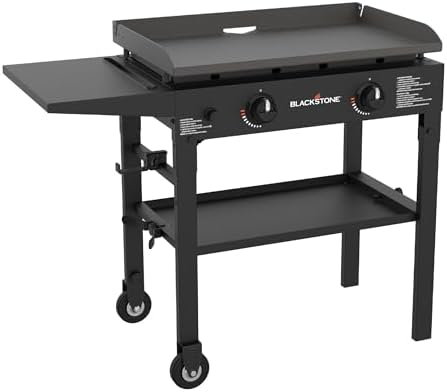
The Standalone Route: Blackstone 2450AZ 28 Inch Omnivore Griddle with Hood Bundle
A standalone griddle means its own burners, its own frame, and its own grease management, and that is the whole reason it cooks better than a slab of iron dropped over grill grates. The 28 inch Omnivore is the size I recommend to most households. It is wide enough for a full breakfast service, four smash burgers with room to work a spatula, and a pile of onions at the same time, and it is small enough that it does not take over the patio the way a 36 inch unit does.
The hood bundle is the part people skip and then regret. A hood traps heat so cheese melts and eggs set without you chasing them around the surface, and it keeps rain, dust, and pollen off the cooking steel between cooks. In a wet climate, that cover is the difference between a seasoned surface and a rusty one.
What you give up is flexibility. A standalone unit needs a level spot, a cover, and a propane supply, and it is not going back in the garage on a whim. What you get is independent burner zones, and burner zones are the single feature that separates a real flat top from a hot plate. If you want hash browns running on one side and pancakes on the other, this is the route.
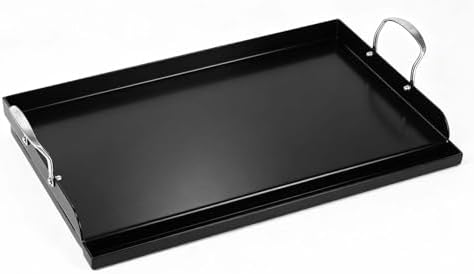
The Big Drop-In: QuliMetal 25 x 16 Inch NanoCeramic Cast Iron Griddle
This is the one I point people toward when they already own a three or four burner gas grill and do not want a second appliance on the patio. At 25 by 16 inches it covers most of a mid-size firebox, which gives you a genuine cooking surface for a family cookout. The NanoCeramic finish is a factory coating on cast iron designed to cut down on sticking while your own seasoning layer builds up on top of it.
Cast iron behaves differently from rolled steel. It is heavier, so it takes longer to come up to temperature, and once it is hot it holds that heat through a batch of cold patties instead of dropping the way thin steel does. That is exactly what you want for searing, and exactly what you do not want if you like to change temperatures quickly.
Measure before you order. If the griddle is wider than your burners can heat, you get a hot middle and cold corners, and no amount of seasoning fixes an uneven surface. Lay a tape across the firebox and compare it to the footprint before you commit.
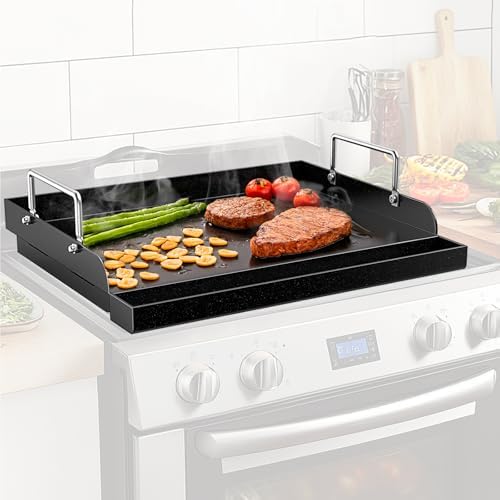
The Small Drop-In: QuliMetal 17 x 13 Inch NanoCeramic Cast Iron Griddle
Same material, same coating, smaller footprint. This one is built for two burner grills, small patios, and couples who cook for two. It covers a single burner zone on most grills, which means one temperature across the whole surface. For a pair of smash burgers, a batch of eggs, or a quick lunch, one zone is all you need.
It is also the better choice if your grill lives on a balcony or in a tight yard, because it stores in a cabinet and comes out in seconds. The tradeoff is capacity. You are cooking in batches, and on a two burner grill you cannot hold a cool side and a hot side at the same time. If you routinely feed four or more people, step up to the larger surface.
The Flip-Over Option: Camp Chef Cast Iron Griddle 16 x 24
This one is a different idea. It is a cast iron plate with a griddle side and a grill side, sized at 16 by 24 inches, so it covers a wide range of gas grills and gives you two cooking surfaces for one storage slot. Griddle side for eggs, pancakes, and smash burgers. Grill side for steaks, chicken, and anything that wants marks and drainage.
The non-stick sides from the factory mean you are not starting from bare iron, and cast iron means it holds heat well once it is up to temperature. The honest tradeoffs: it is heavy, flipping it while it is hot takes two hands and a plan, and whichever side you are not using collects grease and needs cleaning anyway. If you want one piece of iron that does everything reasonably well, this is it. If you want the best possible flat top, a dedicated griddle beats a reversible one.
What Actually Matters Before You Buy
Thickness and flatness. A griddle that warps is a lifetime of uneven burgers. Thicker cast iron resists warping better than thin steel, but nothing survives being dropped or run empty on high heat. Check the surface for flatness when it arrives and send it back if it rocks.
Burner layout over BTU claims. Four burners of nothing beats two burners of hype. What matters is whether the burners sit under the area you actually cook on, and whether they are independent. Independent zones let you hold a cooler corner for eggs while the rest of the surface runs hot.
Grease management. This is where cheap griddles fall apart. You want a trap or a channel that pulls out, empties easily, and does not pool fat next to the food. If you are fighting grease, you are not cooking.
Seasoning is a habit, not a purchase. Every cooking surface rusts if you neglect it. Thin coats of oil, heat until it smokes, repeat. Do that and cast iron outlives the grill it sits on. Skip it for two months in a humid climate and you will spend a Saturday scrubbing rust.
Size for a Tuesday, not for a party. You do not need 36 inches. You need enough surface for the meal you actually cook on a weeknight. Buy bigger than that and you are paying in preheat time and storage space.
The cast iron griddle comparison table
Four options, two families. The table below is the short version: what each surface is for, what it sits on, and where to check the current price.
| Product | Best for | Cook surface | Price |
|---|---|---|---|
 Visit on Amazon → Visit on Amazon →Blackstone 2450AZ 28 Inch Omnivore Griddle with Hood Bundle |
A real flat top with its own burners and zones | Standalone, own frame and grease system | $440.46 |
 Visit on Amazon → Visit on Amazon →QuliMetal 25 x 16 Inch NanoCeramic Cast Iron Griddle |
Three and four burner gas grills, family cooks | Drop-in, 25 by 16 inches | $75.99 |
 Visit on Amazon → Visit on Amazon →QuliMetal 17 x 13 Inch Cast Iron NanoCeramic Griddle |
Two burner grills, balconies, cooking for two | Drop-in, 17 by 13 inches | Check current Amazon price |
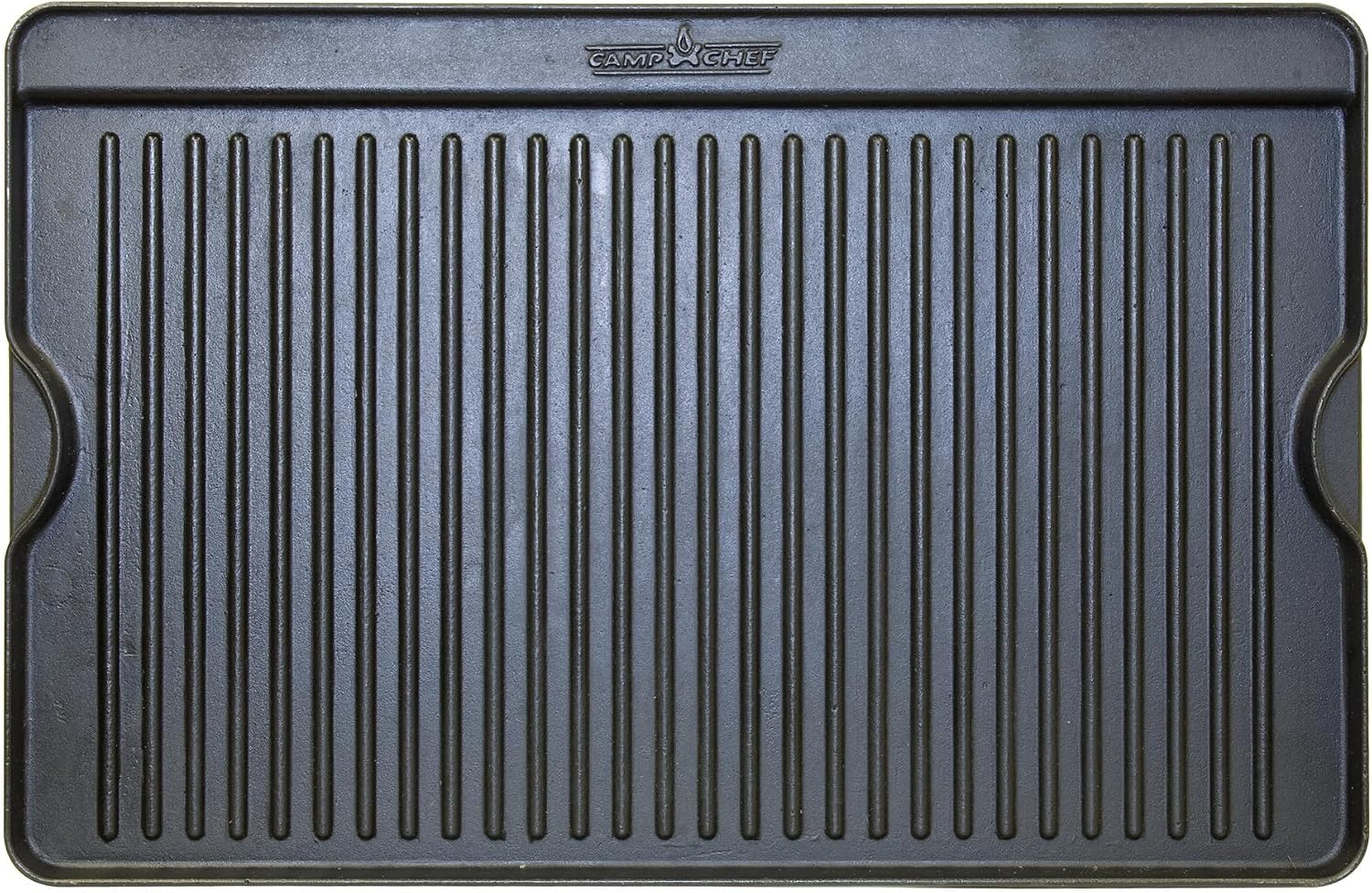 Visit on Amazon → Visit on Amazon →Camp Chef Cast Iron Griddle, 16 x 24 |
One piece of iron that does griddle and grill duty | Reversible, 16 by 24 inches | $85.99 |
Should you buy the Blackstone 2450AZ bundle?
Yes, if you want the real thing and you have a level spot to park it. Independent burner zones are not a marketing line, they are the reason you can hold a cool corner for eggs while the rest of the surface rips hot for burgers. The hood keeps the surface covered between cooks, which is most of the battle against rust.
The honest cost is commitment. It is a dedicated appliance with a footprint, a propane habit, and a cover you have to actually use. If you cook outside three times a week, it earns its space. If you cook outside twice a month, a drop-in surface on the grill you already own makes more sense.
Should you buy a QuliMetal cast iron griddle?
Yes, if you already own a gas grill and you want flat top cooking without a second appliance. The NanoCeramic cast iron surfaces come in two footprints, so you can match the griddle to the grill instead of forcing one size onto everything. Cast iron holds heat through a batch of cold patties better than thin steel, which is the whole point of cooking on iron.
The one thing you have to do is measure. A griddle wider than your burners can heat gives you a hot middle and cold corners, and no seasoning routine fixes that. Check the firebox, then buy the size that fits the heat you have.
Should you buy the Camp Chef Cast Iron Griddle?
Yes, if you want two cooking surfaces without giving up cabinet space. Griddle side for breakfast, grill side for dinner, one plate to store. The factory non-stick sides mean you are not starting from scratch, and cast iron is cast iron.
Just know what you are trading. Reversible plates are heavier and clumsier than dedicated ones, and the unused side still needs cleaning because grease does not care which face is up. Buy it for versatility, not for the best possible flat top.
Whatever you choose, buy the size you will actually use on a Tuesday night, season it like you mean it, and keep a scraper within arm's reach. That combination beats any spec sheet.