I spent thirteen years on a four-foot commercial flat top, eight of them on a diner line that pushed 400 breakfasts before 11 a.m. That job taught me that the flat top griddle setup matters more than the badge on the lid. A griddle with a famous name and a useless grease trap will have you fighting the surface instead of feeding people. So when I look at home gear now, between my food trailer and the 22-inch unit that lives in my Phoenix backyard, I'm looking for three things: even heat across the whole cooking surface, a grease system you can empty without a spatula and a prayer, and steel that holds seasoning because you actually cook on it three times a week.
The best flat top griddle setup for most people in 2026 pairs a two-zone portable griddle with a dedicated cleaner, because that combination covers a Tuesday night of smash burgers and a Sunday brunch without turning your patio into a commercial kitchen.
Here are the four pieces I'd build that setup around, and the honest trade-offs of each.
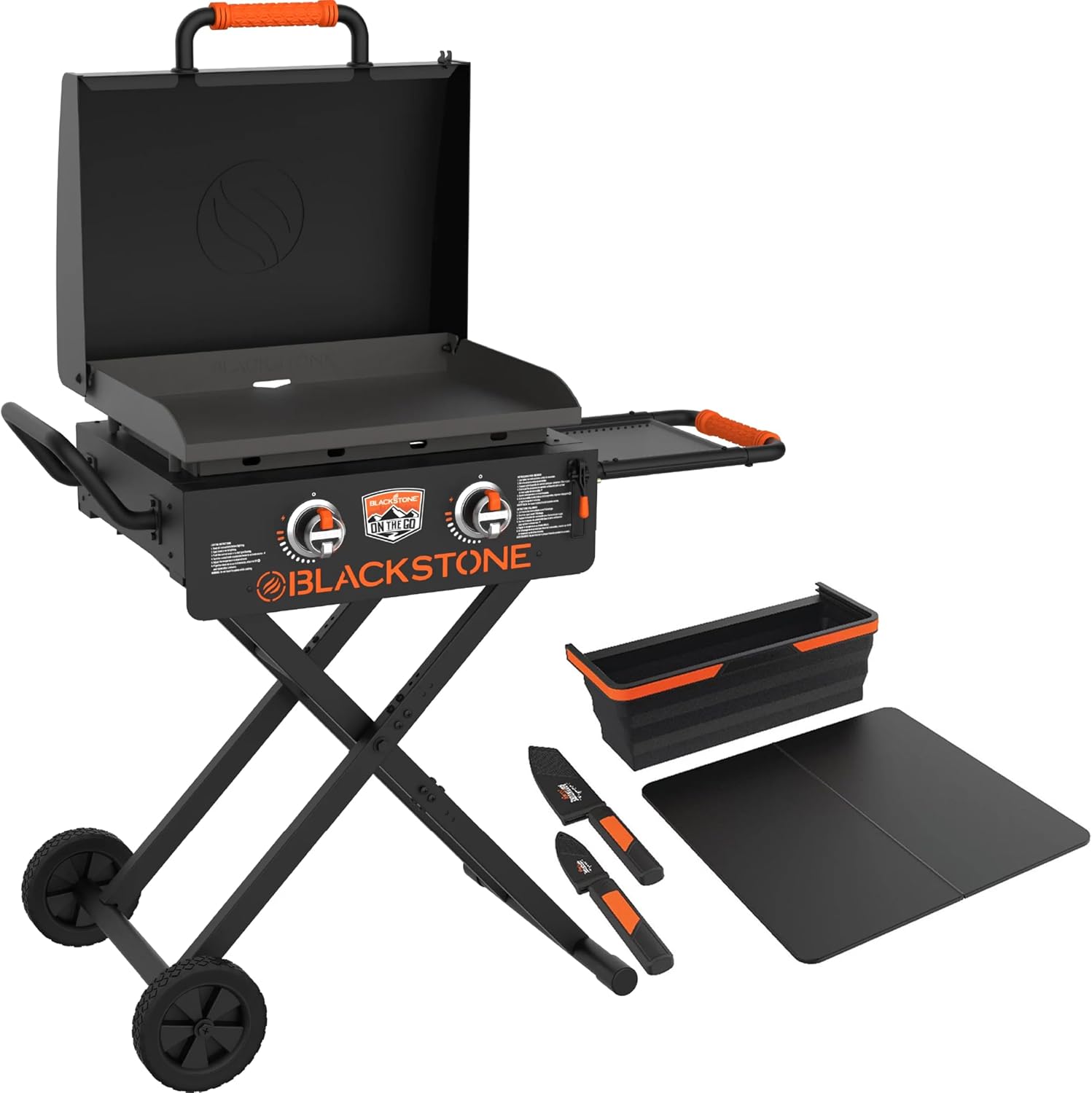
22 Inch Griddle - Portable Omnivore Grill with Flexfold Legs, Includes Accessories, Seasoning, and Griddle Gloves
Real two-zone cooking surface in a package that folds and travels, and it arrives with the accessories, seasoning, and gloves you'd otherwise buy separately
22 inches is a real footprint to store, and it still isn't a full-service surface for a crowd
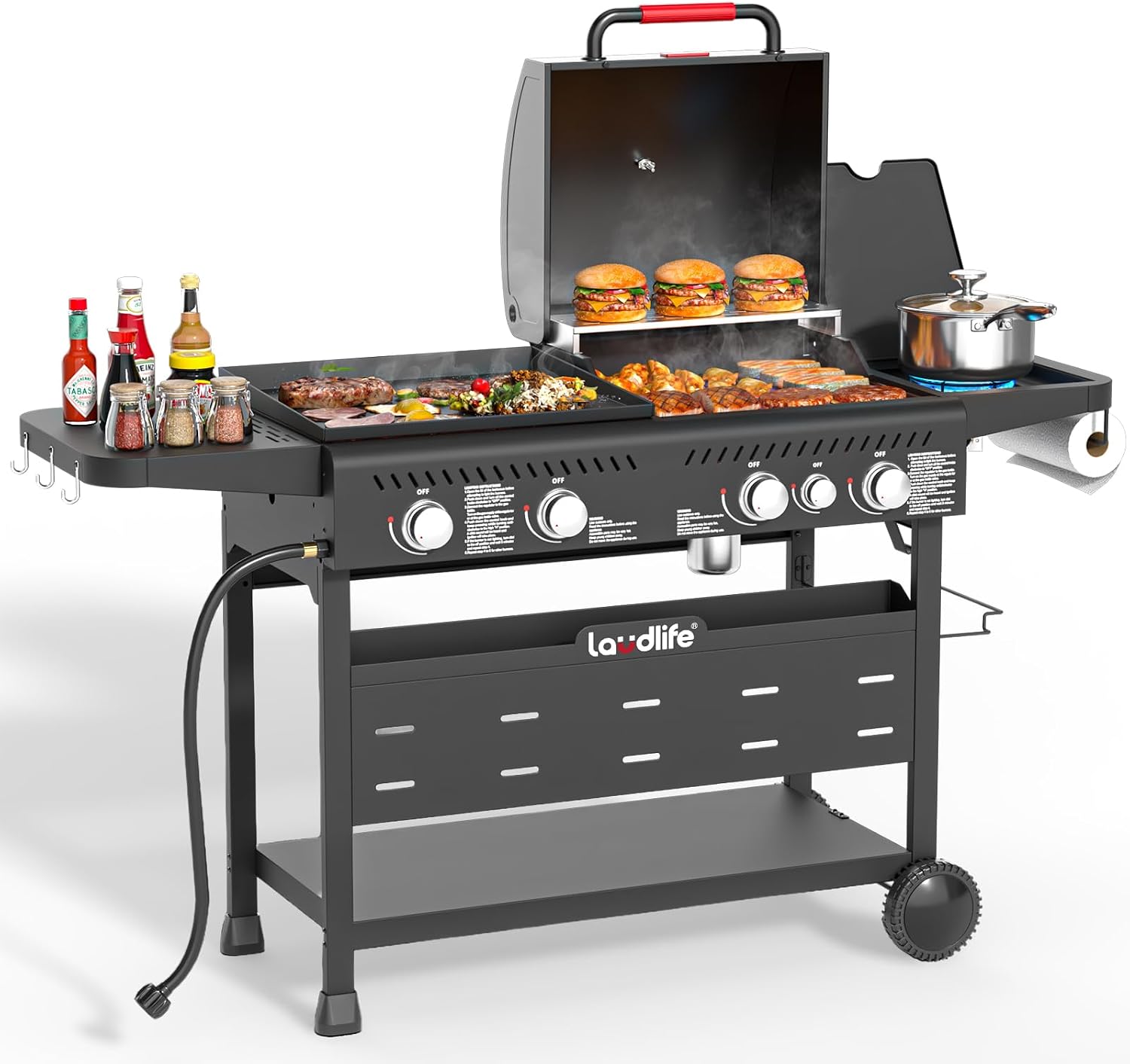
LAUDLIFE 5-Burner Propane Grill Griddle Combo with Side Burner
Five burners plus a side burner means genuine independent heat zones, so you can sear on one end and hold on the other
It is a permanent installation piece: patio space, propane, and a lot more surface to season and maintain
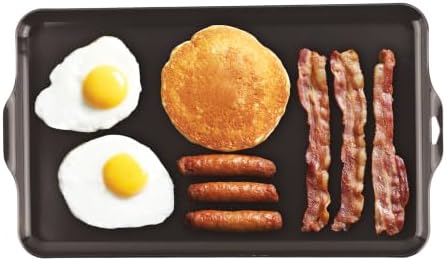
Coghlan's Camp Griddle, Lightweight Aluminum, 16.5 x 10" size, PFAS-Free and Non-Stick Ceramic Coating Cooking Surface for Two Burner Stoves, Ideal for Camping and Outdoor Cooking
Light enough to pack, sized for a two-burner camp stove, and the ceramic coating means no seasoning ritual on a rainy campsite
Aluminum and ceramic are a different discipline: no metal spatula, and heat comes and goes fast
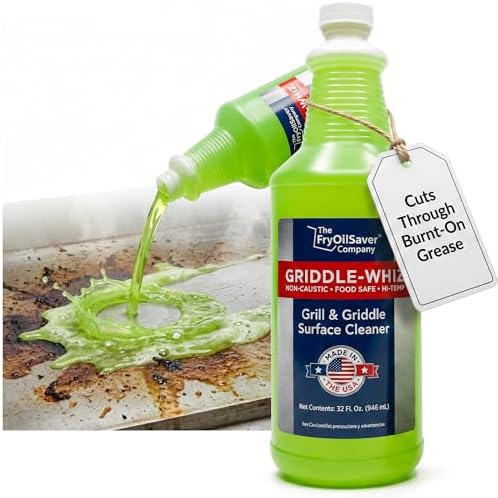
Flat Top Griddle Cleaner, Non-Caustic, Non-Toxic, Made In USA, 32 Fl Oz
Non-caustic and non-toxic, so it's safe around food surfaces and it won't strip seasoning the way harsh degreasers do
It's maintenance, not magic. It won't rescue a surface you left wet and rusty for a month
Prices and availability were captured from Amazon Creators API and may change.
How I judge a flat top griddle setup
Burner count is marketing. Burner layout is engineering. A five-burner unit with burners spaced two inches apart gives you one hot strip and a lot of warm steel. Four burners of nothing beats two burners of hype, but only when those burners are placed so each one owns a real zone of the surface.
Grease management is the second thing I check, and it's the one most buyers ignore until the first pound of bacon. A removable trap you can carry to the trash without dripping is the difference between cooking and cleaning. A trap that requires a spatula to excavate is a design failure, and I've walked away from griddles over exactly that.
Seasoning is a habit, not a feature. Every steel surface I've owned has rusted when I slacked off, and none of them rusted when I didn't. If a manufacturer promises a surface that won't rust, they're selling you a story. What you want is a surface that takes a thin coat of oil easily and comes back to black in one cook after you scrub it.
Finally, footprint. You don't need 36 inches. You need enough room for what you cook on a Tuesday night plus a little margin. Buying two feet more steel than you use means more propane, more storage, and more surface to maintain badly.
The 22-inch portable that acts like a permanent griddle
This is the pick I'd hand most people. The 22 Inch Griddle with Flexfold legs gives you a two-zone cooking surface in a body that folds down and moves, which matters if your cooking happens on a driveway, a tailgate, or a rental patio you don't own. The included accessories, seasoning, and griddle gloves are not filler either. A starter seasoning kit and a set of gloves are the first two things I'd tell a new flat top owner to buy, and having them in the box removes the excuse to let the steel sit bare.
The Flexfold legs are the detail I care about most, because a portable griddle lives or dies on how it stores. Legs that fold flat and lock are the difference between a griddle you use weekly and one you stop dragging out of the garage. Two zones also mean you can run a hot side for smash burgers and a lower side for onions and peppers at the same time, which is the single technique that makes a small flat top feel bigger than it is.
What it gives up: it's a two-burner class surface, so a full breakfast service for a dozen people is a relay race, not a single pass. And 22 inches of steel is still a thing you have to find a shelf for.
The five-burner combo for people who cook for a crowd
If you host, this is the other end of the spectrum. The LAUDLIFE 5-Burner Propane Grill Griddle Combo with Side Burner is built around zone control: five burners under the griddle and a side burner beside it. That side burner is not a gimmick to me. It's where the sauce pot goes while the flat top handles the patties, which is exactly how a short-order line works, and it keeps you from juggling one surface for two jobs.
More zones means more control, and more control means better cooks. You can hold a pile of finished burgers on low at one end while you sear at the other, and you can run a cool zone for toasting buns. That's a real capability, not a spec sheet number.
The honest cost is commitment. This is a patio piece. It wants a permanent spot, it drinks propane, and every square inch of that surface is steel you're responsible for seasoning and scraping. If you cook for four on a Wednesday, you're paying for capacity you won't use most nights. Buy it because you feed people, not because the number is bigger.
The camp griddle for two-burner stove cooking
The Coghlan's Camp Griddle is a different animal, and I mean that as a compliment. It's lightweight aluminum at 16.5 by 10 inches, sized to sit across a two-burner camp stove, with a PFAS-free ceramic non-stick coating. That coating is the whole point: on a campsite, in the rain, at the end of a long hike, you are not building a polymerized oil layer. You're cooking eggs and flipping them off a surface that doesn't care.
The trade-off is discipline. Ceramic non-stick means no metal spatula, no aggressive scraping, and no treating it like the steel flat top at the diner. Aluminum also moves temperature quickly in both directions, which is great for pancakes and less great for a hard sear. You get fast response instead of heat retention. For camp cooking, that's the right trade. For a hundred smash burgers, it's the wrong tool entirely, and I'd rather say that plainly than pretend one griddle does everything.
The boring purchase that keeps the whole setup alive
The Flat Top Griddle Cleaner is 32 fluid ounces of non-caustic, non-toxic cleaner made in the USA, and it's the least exciting item in this article. It's also the one that decides whether your griddle looks the same in year three as it did in month one.
Here's why I prefer a non-caustic formula on a flat top: the surface you're cleaning is a layer of polymerized oil, and the harsh degreasers that cut through carbon the fastest also cut through the seasoning you spent a month building. A cleaner that lifts grease without nuking the surface means you scrape, wipe, re-oil, and get back to cooking. Non-toxic matters too when the same surface is where you flip eggs for your kids.
The caveat is that no bottle replaces technique. Hot surface, thin layer of oil, scrape while it's still warm, wipe it down, and give it a coat before you walk away. The cleaner helps you do that faster. It won't undo a month of neglect, and nothing will.
What you actually give up at each size
Every step up in size buys you capacity and costs you flexibility, fuel, and maintenance time. The camp griddle wins on portability and loses on searing power and surface area. The 22-inch portable wins on the balance between the two, which is why it's the recommendation for most backyards. The five-burner combo wins on zone control and crowd capacity and loses on storage, propane, and the sheer amount of steel you have to keep seasoned.
There's also a technique gap to be honest about. A small surface forces you to cook in batches and hold finished food somewhere, which is a real skill and a real adjustment if you're used to a wide flat top. A large surface lets you spread out and then punishes you if you don't move food through the zones. Neither is better in the abstract. One matches how you cook, and one doesn't.
The setup I'd build
If you want one answer: the 22 Inch Griddle with Flexfold legs, the Coghlan's camp griddle for trips, and the Flat Top Griddle Cleaner on the shelf. That's a home setup that handles weeknights, a Sunday brunch, and a camping weekend without duplicating anything. Add the five-burner combo later if you start feeding twenty people at a time, and not before.
Buy the size you'll actually use. Season it thin and often. Keep the trap clean. That's the whole job, and it's a good one.