Related: How to Season a Flat Top Griddle So It Stays Nonstick
I spent thirteen years on the line, eight of them parked in front of a four-foot commercial flat top that ran from open to close without a break. Four hundred breakfasts a morning teaches you what actually matters on steel and what is just marketing. When I built my own outdoor flat top griddle setup in Phoenix, I did not buy the biggest machine I could find. I bought the surface that matched the cooks I actually do on a Tuesday night.
That is the trap in shopping for a griddle. The listings shout numbers at you: 36 inches, four burners, stainless steel, powder coated steel. None of those numbers tell you whether the heat spreads evenly across the surface, whether the grease trap slides out without a fight, or whether the steel still holds seasoning after sixty days of real cooking. I have cooked on griddles that hit every spec on the box and still ran a hot spot the size of my palm right over the middle burner.
Four pieces cover almost every backyard. Two 36-inch rigs for people who feed crowds, a two-burner portable for everyone else, and the tool set I reach for on every single cook.
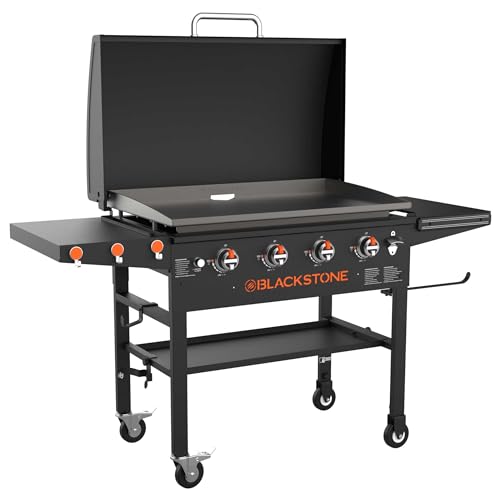
Best Overall: 36-Inch Griddle with Hood and Four Stainless Burners
This is the full station. Four stainless burners under a 36-inch surface, a hood, two side shelves, wheels, and magnetic hooks for hanging a scraper and a spatula exactly where your hand already is. If you have ever worked on a trailer rig, this is that layout brought down to a patio footprint.
Four burners is the part that matters. Not the total heat output, the layout. Four independent zones means you can run a sear zone on the left, a hold zone in the middle, and a low zone on the right for eggs and onions, all at the same time. That is how a diner actually cooks, and it is the difference between serving eight people hot food and serving eight people food that has been sitting.
The hood earns its place too. Close it over a pile of smash burgers with cheese on top and you get a real melt in under a minute. Close it over a batch of onions and they steam instead of scorching. The wheels mean you can roll it out of the weather, and the side shelves hold a sheet pan of patties, a squeeze bottle, and a stack of buns without a folding table.
It is a lot of griddle, and that cuts both ways. Everything you own needs seasoning and upkeep, including the parts you did not cook on. If you cook for four, this is more surface than you will use. If you cook for twenty, it is the reason you volunteered.
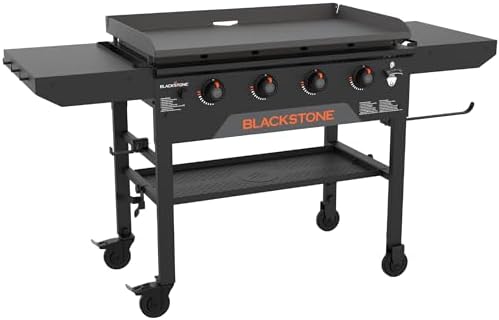
The Classic 36: 2210 Original 36-Inch Omnivore Griddle
This is the shape most people picture when they picture a backyard griddle. A 36-inch cooking surface, two side shelves, a powder coated steel body in black. No hood, no wheels, no extra hardware. Just steel, burners, and shelf space on both sides.
That simplicity is the point. The 36-inch surface gives you room for a full breakfast service: bacon on the left, hash browns in the middle, eggs on the right, and a clear corner for toast. The two side shelves do the work of a prep table, and the powder coated body shrugs off weather better than bare steel.
The trade-off against the station above is straightforward. No hood means no steam-and-melt trick, and no wheels means wherever you set it down is where it stays. If you are choosing between the two, ask yourself one question: do I ever need to melt cheese on twelve burgers at once? If the answer is yes, buy the hood. If the answer is a shrug, save the money and take this one.
What I like about this format is that it does not pretend to be anything else. It is a flat top with shelves. Season it, keep the grease trap clean, and it will outlast whatever else you bought that summer.
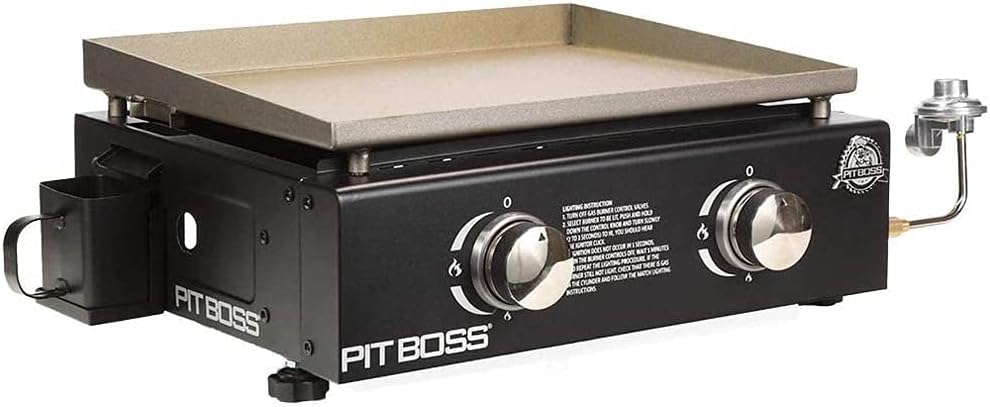
Best Portable: Pit Boss PB336GS Two Burner Flat Top
Two burners, a portable frame, and a cover in the box. This is the griddle for the tailgate, the campsite, the small patio, and the Tuesday night when you are cooking for two and do not want to fire up 36 inches of steel.
Two burners means two zones, and that is a real limitation compared to the 36-inch rigs. You can sear on one side and hold on the other, which covers most of what a weeknight needs. What you cannot do is cook for a crowd in one pass. You cook in rounds: burgers first, then onions, then a batch of peppers, and you hold what is done on the cooler side.
Portability is where it wins. It sets up where the people are, and it comes down and goes in the truck when the party is over. The included cover is not a throw-in detail. Dust, pollen, and rain are what kill a neglected cooking surface, and a griddle that lives outside without a cover is a griddle you will be scraping rust off by spring.
The Tools: OXO Outdoor Grilling Turner and Tongs Set
A burger flipper and a scraper are the tools. That has been my position for years and this set does not change it, because a turner and a pair of tongs cover almost every move you make on a flat top. The turner slides under a smash burger without shredding the crust. The tongs move bacon, flip chicken, and pull a seared steak off the heat without a fork puncturing it.
Buy this with the griddle, not three months later. Nobody regrets owning a proper turner on the first cook. Plenty of people regret using the flimsy one that came with their spatula set.
How I test a griddle
I do not review a griddle until I have cooked 100 smash burgers and a full breakfast service on it. That is not a marketing number, it is the minimum. A hundred burgers tells you whether the surface heats evenly across its full width and whether the grease trap actually keeps up when fat is running.
The breakfast service is the real exam. Bacon first, which floods the surface with grease. Then hash browns, which need steady medium heat and will show you every hot spot. Then eggs, which are unforgiving and will tell you in ten seconds whether the zone you thought was low is actually low.
Then the seasoning test. I cook, clean with a scraper and water while the surface is hot, oil it thin, and repeat for sixty days. If a griddle starts showing rust in that window, the problem is maintenance, not the machine. Everything rusts if you neglect it. I say that in every review because it is true in every review.
What actually matters, in order
Burner layout beats total heat output. Four burners of modest output will cook better than two burners of hype, because control is the whole game. You want zones you can set independently and a surface that responds when you turn a knob down. If a griddle only knows hot and hotter, you will be moving food around the surface all cook to keep it from burning.
Grease management is the second thing and it decides whether you enjoy cooking on the thing. A trap that lifts out in one motion gets emptied every time. A trap with corners and a narrow lip gets emptied when it overflows, which is to say never on schedule. I have seen good griddles become miserable because of a bad trap.
Seasoning is a habit, not a purchase. Thin coats, heat, patience, repeat. The steel on all four of these pieces will hold a season if you treat it the same way every time. None of them are magic.
And steel thickness shows up in year three, not week one. Thinner steel moves temperature faster and holds less of it, which is fine for a portable and less fine for a station you expect to cook breakfast for a crowd on. That is the honest dividing line between a budget griddle and a good one.
The flat top griddle reference table
This is how I sort the four pieces when someone asks me what to buy.
| Product | Format | Who it fits | Price |
|---|---|---|---|
 Visit on Amazon → Visit on Amazon →36-Inch Griddle with Hood and Four Stainless Burners |
36-inch, four burners, hood, wheels, two side shelves, magnetic hooks | Crowd cooking, permanent patio station | Check current Amazon price |
 Visit on Amazon → Visit on Amazon →2210 Original 36-Inch Omnivore Griddle |
36-inch, two side shelves, powder coated steel | The classic backyard 36 | Check current Amazon price |
 Visit on Amazon → Visit on Amazon →Pit Boss PB336GS Two Burner Portable Flat Top Griddle |
Two burner portable, cover included | Tailgating, camping, small patios | Check current Amazon price |
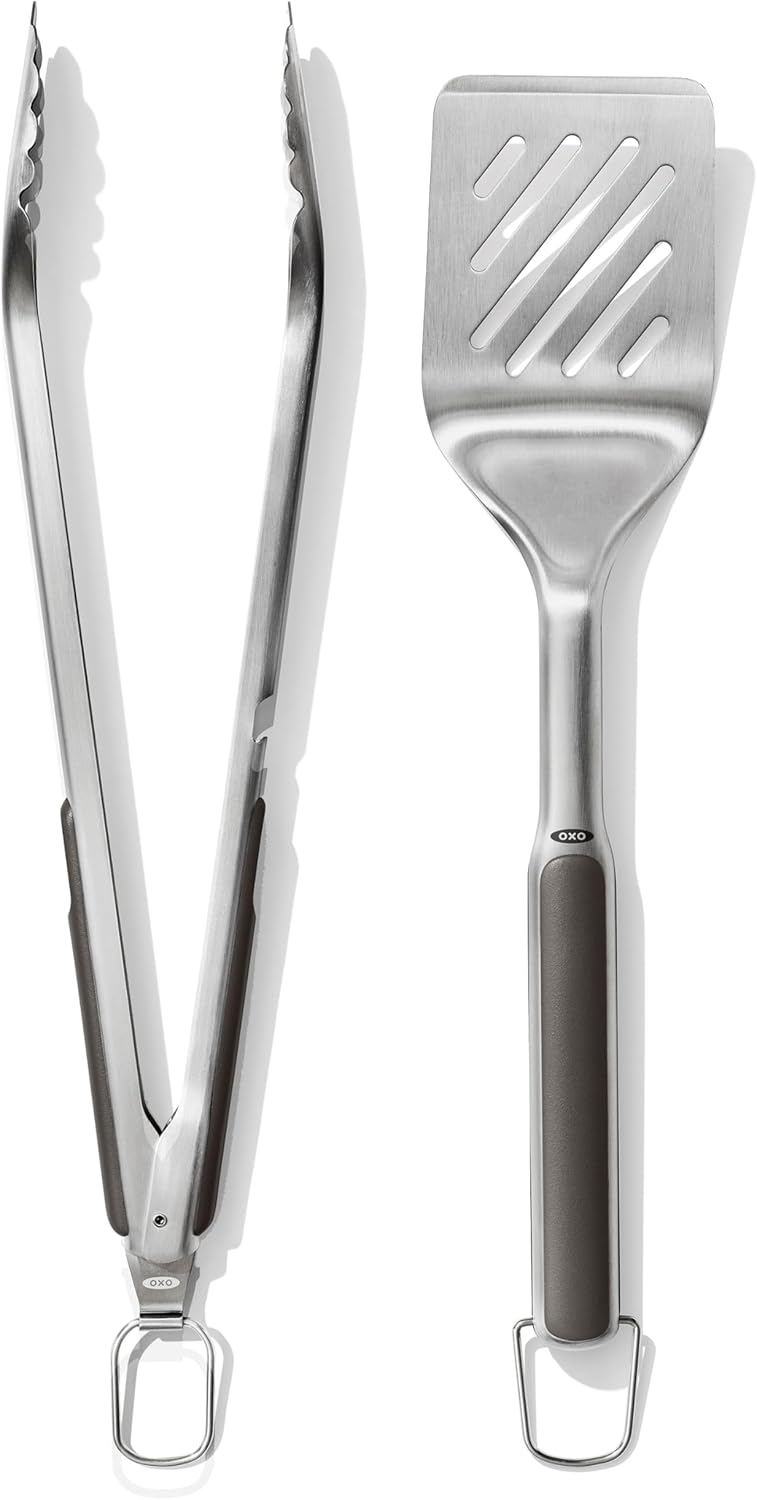 Visit on Amazon → Visit on Amazon →OXO Outdoor Grilling Turner and Tongs Set |
Turner and tongs | Every cook, every griddle | $17.99 |
Should you buy the 36-inch griddle with hood and four stainless burners?
Yes, if you feed crowds and you have a permanent place to park it. Four burners give you four real zones, the hood lets you melt and steam, and the shelves and hooks keep the cook moving. It is the closest thing to a diner line you can put on a patio.
It is also the most griddle you can buy before you get into trailer territory, and you have to maintain all of it. If your cooks are usually for four, you will spend more time seasoning steel than cooking on it. Buy the size you will actually use, not the size that looks impressive in a photo.
Should you buy the 2210 Original 36-inch Omnivore?
Yes, for most backyards this is the pick. It is the classic 36-inch layout, two side shelves, powder coated steel body, no extra hardware to clean. You get genuine zone cooking and room for a full breakfast, and you skip the hood and wheels you may never need.
The one thing you give up is the melt-and-steam trick. If cheese on a crowd of burgers is your signature, spend up for the hood. Otherwise this is the better value of the two 36s.
Should you buy the Pit Boss PB336GS?
Yes, if your cooking happens away from home or on a small patio. Two burners, portable frame, cover included. Cook in rounds, hold what is done on the cool side, and you will feed a tailgate just fine.
If you are choosing between this and a 36-inch rig for a permanent setup, the 36 wins on capacity every time. The portable wins on the nights you want to cook where the people are.
Should you buy the OXO turner and tongs set?
Yes. Two tools, one cook, no drawer of gadgets required. Get the turner under the patty, get the tongs on the bacon, and spend your money on steel instead of accessories.